How to Get Rid of “Inner Ear Crystals” and Reduce Vertigo 🦻🌀
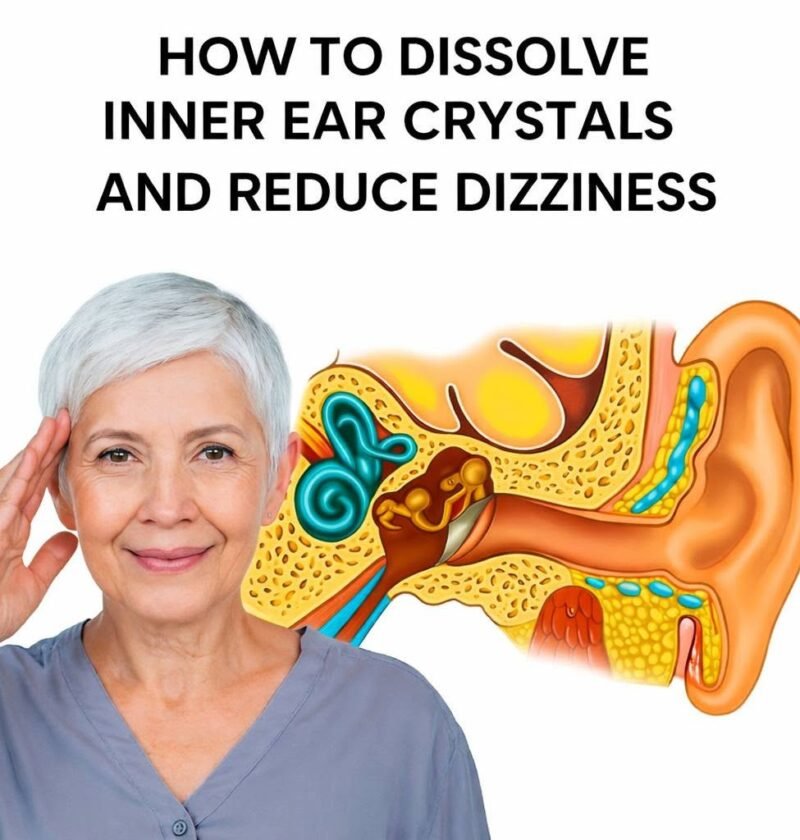
If by “inner ear crystals” you mean BPPV (benign paroxysmal positional vertigo), tiny calcium crystals called otoconia have moved into one of the inner-ear canals. They can cause brief spinning sensations when you roll over in bed, lie down, get up, or look up/down. (Royal United Hospitals Bath)
The most effective treatment: the Epley maneuver
The Epley maneuver uses a sequence of head and body positions to move the crystals back to where they belong. It is often highly effective and may provide relief after one or two treatments. (Mayo Clinic)
Because the correct movements depend on which ear and which canal are affected, it’s best to have a doctor, audiologist, or physical therapist confirm the diagnosis and teach you the appropriate maneuver.
If you’ve already been told you have right-ear or left-ear BPPV, an NHS patient guide provides step-by-step home Epley instructions. (University Hospital Southampton)
What if you can’t do the Epley?
Brandt-Daroff exercises are another home option sometimes recommended for BPPV and can be easier to perform without assistance. (The Rotherham NHS Foundation Trust)
⚠️ Safety first
The maneuvers can temporarily make you very dizzy or nauseated, so perform them somewhere safe. Having another person nearby is particularly sensible the first time. You may also feel somewhat unsteady for a day or two afterward. (University Hospital Southampton)
Don’t assume every type of dizziness is caused by ear crystals. Sudden continuous vertigo, severe headache, difficulty speaking, facial drooping, weakness/numbness, double vision, fainting, chest pain, or inability to walk normally can indicate a serious condition such as stroke and requires emergency medical evaluation.
Bottom line: If your vertigo consists of short spinning attacks triggered by particular head movements, BPPV is one possibility, and a correctly performed canalith-repositioning maneuver such as Epley is usually much more useful than medicines or home remedies.