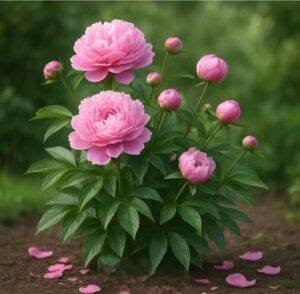
If you’re developing this into a gardening article, the key is that peony care immediately after flowering affects next year’s display. Here are 10 important things to do:
1. Remove spent flowers
Once the petals have fallen, cut off the faded flower heads. This prevents the plant from putting unnecessary energy into seed production and keeps the plant looking tidy.
2. Keep the foliage
Don’t cut peony leaves back just because flowering is over. The leaves continue photosynthesizing and help the plant store energy for next year’s growth.
3. Water during dry weather
Peonies generally prefer evenly moist soil while their foliage remains active. Water deeply when rainfall is insufficient, rather than giving frequent shallow sprinkles.
4. Avoid soaking the leaves
When watering, direct water toward the soil. Keeping foliage wet for prolonged periods can encourage fungal problems, particularly in humid conditions.
5. Check for disease
Look for black or brown spots, powdery growth, wilting stems, or other unusual symptoms. Remove badly affected plant material and dispose of diseased debris rather than composting it.
6. Don’t overfertilize
After flowering, it’s tempting to give the plant a heavy dose of fertilizer. Usually, that’s unnecessary. Excess nitrogen can encourage lots of leafy growth without necessarily producing better flowers next year.
7. Support the plant
If heavy blooms have caused stems to flop, consider installing a peony ring or other support before next year’s flowers appear. Supporting plants while they’re still young and growing is easier than trying to rescue them once they’re fully open.
8. Control weeds
Keep competing weeds away from the base of the plant. A weed-free area reduces competition for moisture and nutrients and improves air circulation.
9. Mulch carefully
A thin layer of organic mulch can help conserve soil moisture and moderate temperature. Keep mulch away from the crown of the peony rather than piling it directly against the stems.
10. Wait until fall to cut the foliage
This is one of the easiest mistakes to make. Let the foliage remain intact while it’s green and healthy. Once it has naturally yellowed or died back in autumn, it can be cut to ground level and removed, particularly if disease was present.