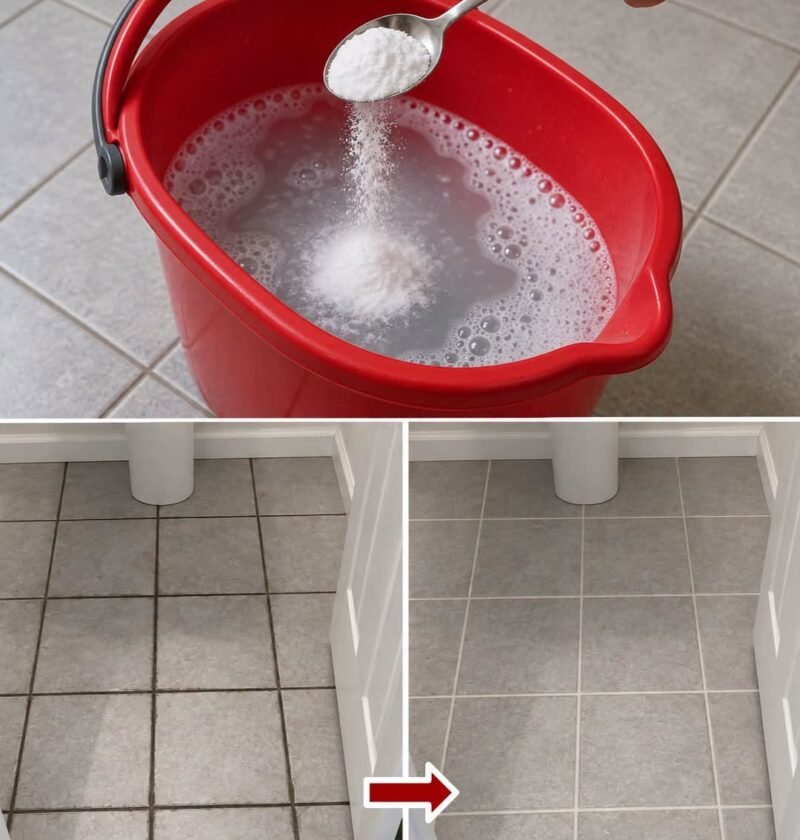
Step-by-Step Method That Safely Removes Black Grout Spots
-
Pre-Clean Surface Grease & Dirt: Sweep or vacuum the floor, then mop with warm water and a few drops of plain dish soap so grease isn’t blocking the cleaner from reaching the stain.
-
Apply an Oxygen-Based Paste or Soak:
-
Option A (Best for stubborn black mold/mildew spots): Mix 2 parts baking soda + 1 part 3% hydrogen peroxide (plus a drop of dish soap) into a thick paste. Press it directly onto the black spots with an old toothbrush.
-
Option B (Best for larger floor areas): Dissolve oxygen bleach powder (sodium percarbonate) in warm water according to the label and mop/pour generously onto the grout lines so they stay wet.
-
-
Let It Dwell for 15–30 Minutes: Keep the paste or solution damp so oxygen bubbles can lift embedded mold spores and organic stains out of the grout pores (do not let it dry rock-hard).
-
Scrub With a Stiff Nylon Grout Brush: Scrub firmly along the grout lines—avoid metal wire brushes, which gouge grout and scratch tile glaze.
-
Rinse Thoroughly & Dry: Wipe away residue with clean water and a microfiber mop, then run a fan or open a window so the floor dries completely.
Important Safety & Material Rules
-
Never mix cleaners: Never combine chlorine bleach with vinegar, lemon juice, or ammonia (releases dangerous chlorine or chloramine gases).
-
If you have natural stone tiles (marble, travertine, limestone, slate): Skip vinegar, lemon, and acidic cleaners completely—acid permanently etches dull spots into stone. Stick strictly to pH-neutral stone cleaner or brief hydrogen peroxide/baking soda spot treatment.
-
When stains won’t budge: If black spots remain after two oxygen-bleach/peroxide rounds, mold has penetrated permanently deep into unsealed grout. A grout colorant/sealer pen recoats and seals the line cleanly without regrouting, or severely pitted/crumbling grout can be scraped out and regrouted.
How to Keep Black Spots From Coming Back
-
Seal clean, dry grout once a year: Once the grout dries for 24–48 hours, apply a penetrating silicone- or fluoropolymer-based grout sealer so moisture and dirty mop water bead on top instead of soaking in.
-
Stop pushing dirty mop water into grout lines: Rinse your mop frequently and dry bathroom/kitchen floors after heavy water spills.