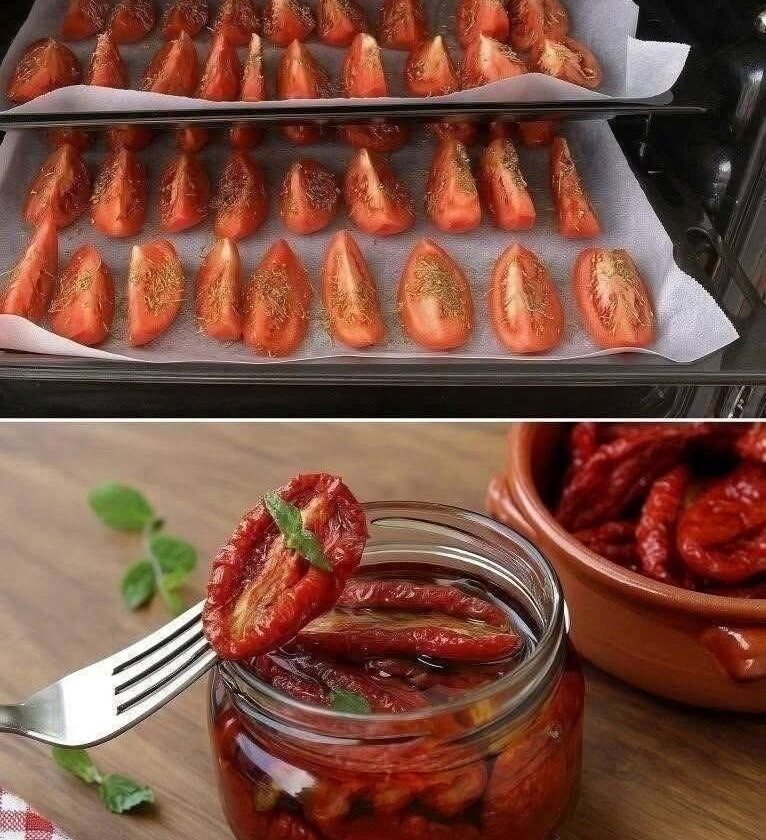
Preserving tomatoes at home for the winter without using water or vinegar is a wonderful, traditional method—often used across the Mediterranean. By relying solely on the natural juices of the tomatoes (or preserving them in olive oil/fermenting in salt), you preserve their rich, concentrated flavor without diluting them.
Here are the two best, most traditional ways to preserve tomatoes for winter without water or vinegar:
Method 1: The Traditional “Raw Pack” in Their Own Juice (For Sauces and Soups)
This method uses only the natural water content of the tomatoes and a little salt. Because tomatoes are mildly acidic, packing them tightly allows them to release their juices, creating their own preserving liquid.
-
Choose the Right Tomatoes: Use fully ripe, firm plum or Roma tomatoes. Avoid overripe or bruised ones.
-
Sterilize Your Jars: Wash glass canning jars and lids thoroughly in boiling water to ensure they are completely sterile.
-
Prep the Tomatoes:
-
Wash them thoroughly.
-
You can peel them if you prefer (score an “X” on the bottom, blanch in boiling water for 30 seconds, plunge into ice water, and the skins will slip right off), or leave them whole or quartered with the skins on.
-
-
Pack Tightly: Pack the raw tomatoes tightly into the jars. Press them down firmly so they release their natural juices, leaving about 1/2 inch of headspace at the top.
-
Add Salt (Optional Natural Preservative): Add about 1/2 teaspoon of non-iodized sea salt per pint jar (or 1 teaspoon per quart) to enhance flavor and safety. Do not add water.
-
Seal and Process: Wipe the jar rims clean, apply the lids and screw bands fingertip-tight. To store safely for winter, process the jars in a boiling water bath for 85 minutes (for pints) or 95 minutes (for quarts), completely submerging the jars. The heat drives out air and kills bacteria, sealing the natural juices inside.
Method 2: Slow-Roasted or Dehydrated Tomatoes Stored in Olive Oil (For Rich, Intense Flavor)
If you want something rich and savory that tastes like summer sunshine in the middle of winter, slow-roasting is the absolute best approach.
-
Slice and Season: Cut plum or cherry tomatoes in half, place them cut-side up on a baking sheet lined with parchment paper. Drizzle lightly with olive oil, a pinch of sea salt, and optionally some dried oregano or garlic powder.
-
Slow Roast: Bake at a low temperature (around 225°F / 110°C) for 4 to 6 hours until they are shriveled, concentrated, and leathery, but not completely bone-dry.
-
Pack in Olive Oil: Let them cool completely. Pack the roasted tomatoes tightly into a sterile glass jar, ensuring there are no air pockets.
-
Submerge Completely: Pour high-quality extra virgin olive oil over the tomatoes until they are completely submerged by at least half an inch of oil. Oil blocks oxygen and prevents bacteria from growing.
-
Storage: Store these jars in the refrigerator (not the pantry, as oil-packed roasted vegetables at room temperature can risk botulism). Properly submerged in oil in the fridge, they will keep for several months and add incredible depth to pastas, salads, and breads all winter long.
Important Safety Note: When preserving low-acid or neutral foods at home without vinegar or heavy preservatives, always follow tested canning guidelines (such as the USDA Complete Guide to Home Canning) to ensure proper processing times and prevent foodborne illnesses like botulism.
Are you looking to make a large batch for long-term pantry storage, or would you prefer a quick batch to keep in the fridge?