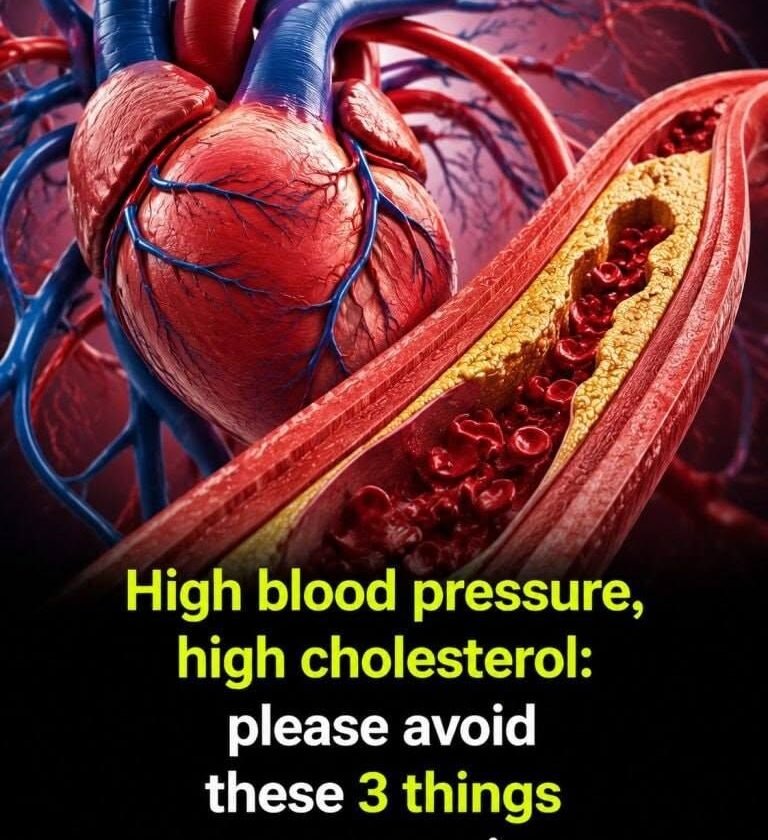
High blood pressure + high cholesterol: 3 morning habits to avoid
There isn’t a medically established rule that people with high blood pressure and high cholesterol must avoid exactly three things every morning. But these three habits are worth limiting, particularly if they occur regularly.
1. 🚬 Smoking
Nicotine can temporarily increase blood pressure and heart rate and constrict blood vessels. Smoking also substantially increases the risk of heart attack and stroke.
If you smoke, quitting altogether is far more important than simply avoiding cigarettes in the morning.
2. 🥓 A breakfast high in salt and processed meats
Bacon, sausages, processed meats, salty cheeses, and heavily salted packaged foods can provide large amounts of sodium and saturated fat.
Too much sodium can raise blood pressure, while replacing saturated fat with unsaturated fat can help improve LDL cholesterol.
Try options such as oatmeal with fruit and unsalted nuts, plain yogurt, whole-grain foods, or eggs with vegetables, depending on yourened beverages, pastries, sugary cereals, and similar foods can contain substantial added dietary needs.
3. 🥤 Sugary drinks and highly processed breakfast foods
Sweetened beverages, pastries, sugary cereals, and similar foods can contain substantial added sugar and calories. Eating them frequently can make weight, blood glucose, and cardiovascular risk harder to manage.
What about morning coffee?
You don’t automatically need to stop drinking coffee. Caffeine can temporarily raise blood pressure, particularly if you’re sensitive to it. If you’re concerned, you can measure your blood pressure before and again about 30–120 minutes after caffeine to see whether you have a significant response.
Don’t stop your medication
If you’re taking medication for blood pressure or cholesterol, don’t skip or discontinue it because of an online health claim. Some medications have specific timing or food instructions, so ask your doctor or pharmacist if you’re uncertain.
Bottom line: The most important habits are long-term ones: avoid tobacco, limit sodium and saturated fat, emphasize minimally processed foods, exercise regularly, and take prescribed medication consistently. A single morning meal isn’t what determines your cardiovascular risk.