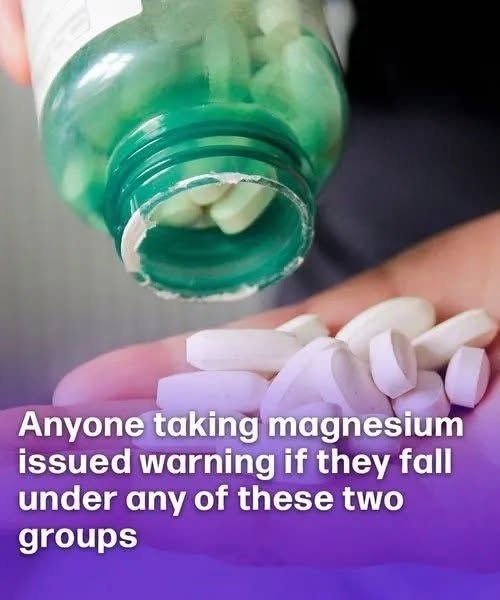
Magnesium Supplements: Two Groups That Should Be Especially Careful
Magnesium is an essential mineral, but more isn’t always better. The main concern with high-dose magnesium supplements is that excess magnesium is normally removed by the kidneys. When kidney function is impaired, magnesium can accumulate and, in severe cases, cause dangerous toxicity. ODS
1. People with kidney disease
People with reduced kidney function or kidney failure are at the greatest risk from excessive supplemental magnesium because their kidneys may not be able to eliminate it efficiently. Severe accumulation can cause low blood pressure, weakness, difficulty breathing, abnormal heart rhythms, and potentially cardiac arrest. ODS
They should check with a healthcare professional before taking magnesium supplements or magnesium-containing laxatives and antacids.
2. Older adults
Older adults deserve particular caution because kidney function can decline with age, and they are also more likely to take multiple medications or have chronic conditions that affect magnesium levels. This doesn’t mean older adults should avoid magnesium—only that high-dose supplementation should be individualized. ODS
How much is too much?
For healthy adults, the U.S. NIH’s upper limit for magnesium from supplements and medications is 350 mg per day. This limit does not include magnesium naturally present in food. Higher amounts may sometimes be medically appropriate under professional supervision. ODS+1
Common consequences of taking too much supplemental magnesium include diarrhea, nausea, and abdominal cramping. Extremely high amounts can become much more serious. ODS
One important distinction: magnesium from normal foods isn’t considered a toxicity concern in healthy people; the main concern is excessive amounts from supplements or magnesium-containing medicines. ODS
If someone with kidney disease is already taking magnesium, it’s worth reviewing the exact product, dose, and other medications with their doctor or pharmacist.