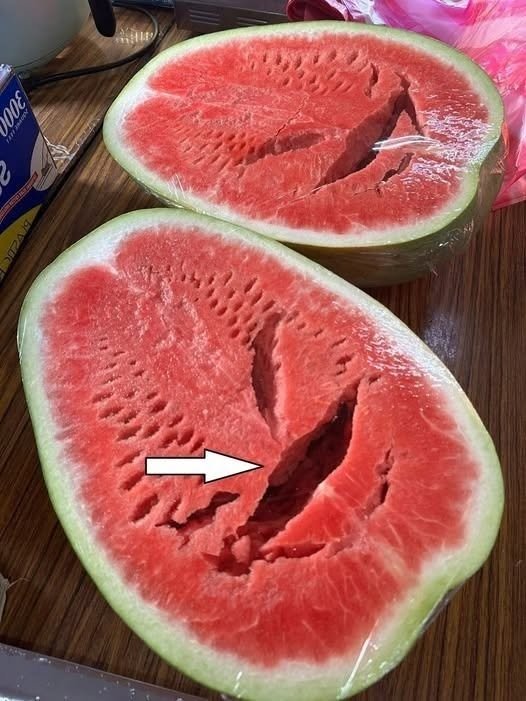
Not necessarily. Cracks inside a watermelon do not automatically mean it is unsafe to eat. The key is what the cracks look and smell like and whether the fruit has been properly stored.
What cracks can mean 🍉
-
Dry, pale or hollow-looking cracks in the flesh: These can occur from growing conditions and are sometimes associated with hollow heart. The watermelon may have an unusual texture but isn’t automatically spoiled.
-
Soft, wet, mushy areas around the cracks: More concerning for deterioration or microbial spoilage. It’s safest to discard the fruit.
-
Bad, fermented, sour or rotten smell: Don’t eat it.
-
Slimy flesh, mold, unusual discoloration, or leaking juice: Discard it rather than trying to cut around the affected area.
-
Cracks extending from a damaged rind: Be more cautious because damage can provide an opportunity for bacteria to enter.
A simple rule
If the watermelon looks normal, smells fresh, and has only internal dry cracking, the cracks alone aren’t a reason to throw it away. But if you see spoilage signs—especially an off odor, slime, mold, or mushiness—discard it.
Once cut, watermelon should be refrigerated promptly and kept refrigerated; don’t leave cut melon sitting at room temperature for extended periods.
If you want, you can send me a photo of the cracks inside your watermelon, and I can explain what they appear to be.