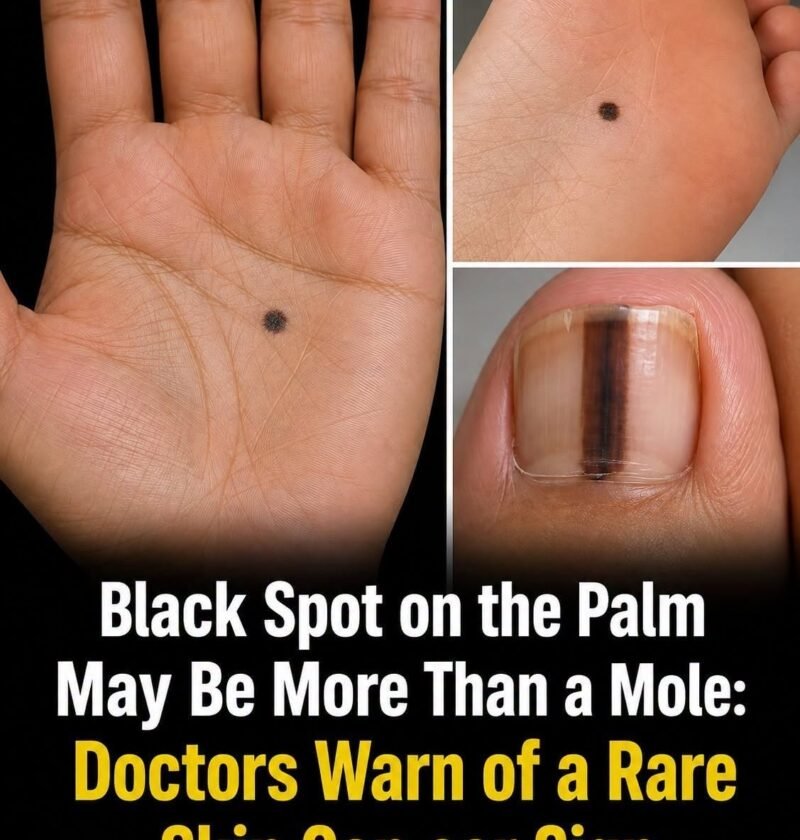
A tiny black spot on the skin is not automatically dangerous. It could be an ordinary mole, freckle, blood spot, or another benign skin lesion. But a new or changing dark spot can sometimes be an early sign of melanoma, a potentially serious form of skin cancer.
A
American Academy of Dermatology
+1
What to watch for: ABCDE
A — Asymmetry: one half doesn’t resemble the other.
B — Border: edges are irregular, jagged, or poorly defined.
C — Color: the spot contains multiple colors or uneven shades of black, brown, red, white, or blue.
D — Diameter: melanomas are often larger than 6 mm, but they can be smaller, so size alone doesn’t rule one out.
E — Evolving: it changes in size, shape, color, or appearance over weeks or months.
A
American Academy of Dermatology
+1
Also pay attention to a spot that itches, bleeds, develops a sore, becomes raised, or simply looks noticeably different from your other moles.
C
CDC
For people with darker skin, don’t overlook the palms, soles, fingers, toes, and areas under or around the nails; melanoma and other skin cancers can occur there.
A
American Academy of Dermatology
Bottom line: Don’t panic over one black spot, but don’t ignore a new, unusual, or changing one. A dermatologist can examine a suspicious spot with magnification and determine whether it needs further testing.
A
American Academy of Dermatology
If you have a photo of the spot, you can upload it and I can explain what features are worth discussing with a dermatologist.
A
C
Sources