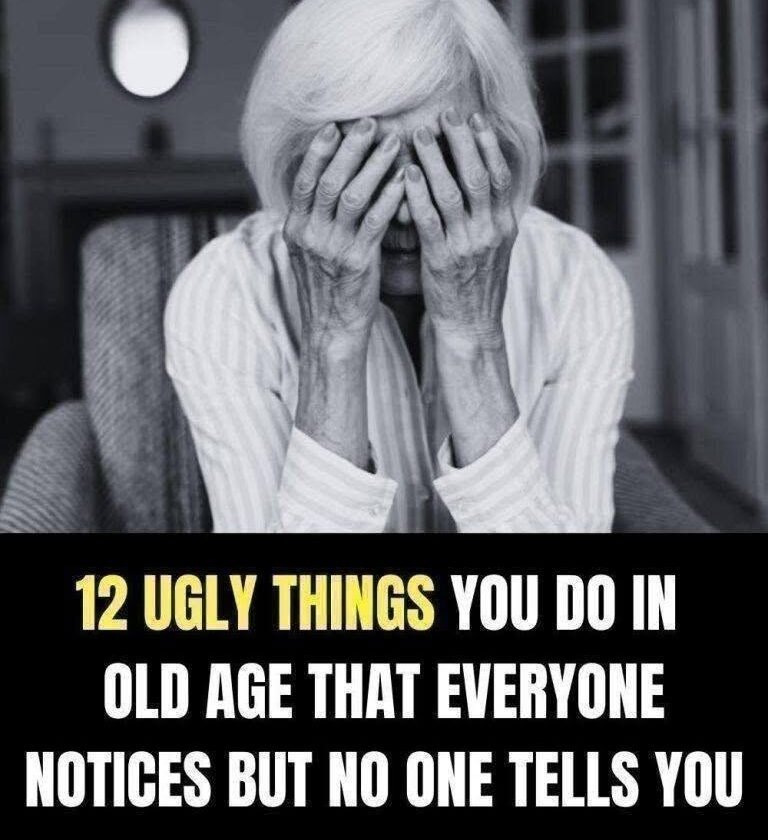
That headline is needlessly insulting and ageist. If the goal is to discuss hygiene or social habits that can change with aging, it’s better to focus on the behavior rather than labeling older people as “nasty.”
A more respectful version would be:
12 Everyday Habits That Can Become More Noticeable With Age
Skipping regular dental care — dry mouth, medications, or difficulty reaching a dentist can contribute to bad breath or dental problems.
Wearing the same clothes too often — mobility or laundry difficulties can sometimes make routine clothing changes harder.
Neglecting oral hygiene — brushing and cleaning dentures regularly remain important.
Forgetting deodorant or antiperspirant — changes in routine, memory, or mobility can play a role.
Not washing hair regularly — limited mobility or difficulty standing in the shower can make hair care challenging.
Ignoring toenails — thick or difficult-to-reach nails may require professional care.
Wearing unwashed shoes or slippers — footwear can retain sweat and odor.
Not changing bedding frequently enough — washing sheets and pillowcases regularly helps control sweat, oils, and allergens.
Poor hand hygiene — especially important before preparing food and after using the bathroom.
Wearing clothes that aren’t fully dry — damp laundry can develop an unpleasant odor and encourage mildew.
Leaving dentures uncleaned overnight — dentures should be cleaned according to dental guidance and handled appropriately during sleep.
Ignoring persistent body odor — a sudden or unusual change can sometimes reflect an underlying medical issue rather than poor hygiene.
The key point is that changes in hygiene aren’t necessarily a matter of laziness or carelessness. Arthritis, reduced mobility, vision problems, cognitive changes, incontinence, depression, medication effects, and other issues can make ordinary self-care more difficult.
If someone suddenly stops maintaining personal hygiene, the most helpful response is usually compassion and finding out what’s making the task difficult, rather than embarrassment or criticism.