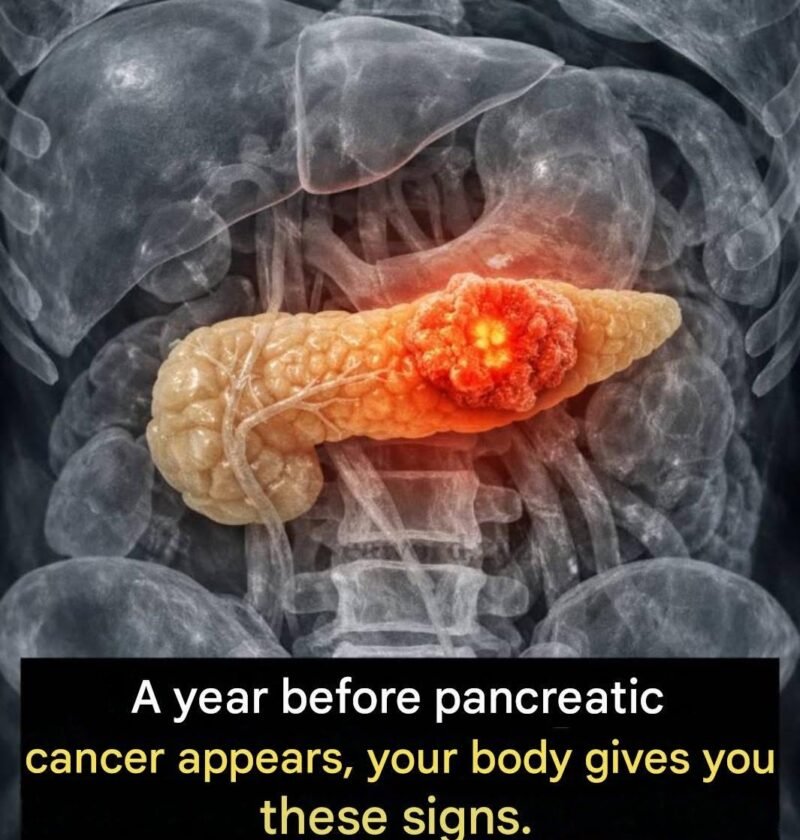
Pancreatic cancer is notoriously referred to as a “silent killer” because the pancreas is deeply hidden behind other organs in the abdomen, and early-stage tumors rarely cause noticeable pain or obvious physical changes. By the time symptoms do appear, the cancer has often advanced.
Knowing the subtle, early warning signs can make a critical difference in catching the disease early. Here are the subtle and progressive symptoms doctors urge people not to ignore:
1. Painless Jaundice (Yellowing of Skin and Eyes)
-
What Happens: If a tumor develops in the head of the pancreas, it can press against the bile duct, blocking the flow of bile into the small intestine. Bilirubin then builds up in the blood.
-
The Sign: A distinct yellow tint to your skin and the whites of your eyes, accompanied by dark, cola-colored urine and unusually pale, clay-colored stools. Crucially, this type of jaundice is often painless at first, which differentiates it from common gallbladder issues.
2. Unexplained Weight Loss and Loss of Appetite
-
What Happens: Tumors alter your body’s metabolism and disrupt normal digestive enzyme production, making it difficult to process fats and nutrients.
-
The Sign: Dropping significant weight (e.g., 10 pounds or more) rapidly without changes to your diet or exercise routine, often accompanied by a sudden, complete lack of interest in food or feeling full after eating very little.
3. Upper Abdominal or Mid-Back Pain
-
What Happens: As the tumor grows, it can press against nerves or surrounding organs in the abdomen or wrap around the back of the pancreas.
-
The Sign: A dull, persistent ache in the upper abdomen that often wraps around to the middle or upper back. A common telltale sign is that the pain may feel worse when you lie flat on your back and temporarily ease when you lean forward.
4. New-Onset Type 2 Diabetes (Without Risk Factors)
-
What Happens: The pancreas is responsible for producing insulin. When cancerous cells damage the pancreatic tissue, it can abruptly disrupt insulin regulation.
-
The Sign: Being diagnosed with diabetes out of nowhere—especially if you do not have typical risk factors like a family history, obesity, or poor diet—particularly when accompanied by unexplained weight loss.
5. Digestive Disturbances and Floating Stools
-
What Happens: When a tumor blocks pancreatic ducts, digestive enzymes cannot reach the intestines to break down food properly (a condition called exocrine pancreatic insufficiency, or EPI).
-
The Sign: Frequent bouts of indigestion, nausea, or stools that are unusually pale, bulky, greasy, foul-smelling, and float in the toilet bowl because fat isn’t being digested.
6. Sudden, Unexplained Blood Clots (DVT)
-
What Happens: Pancreatic cancer can hyperactivate the body’s clotting mechanisms, releasing substances into the bloodstream that make blood abnormally thick.
-
The Sign: Developing a deep vein thrombosis (DVT)—a painful blood clot, swelling, or redness in the calf—or a pulmonary embolism (blood clot in the lungs) without any prior history or obvious trigger.
⚠️ When to See a Doctor:Many of these symptoms (like back pain, indigestion, or fatigue) overlap heavily with common, harmless gastrointestinal conditions. However, if you experience a persistent combination of unexplained weight loss, new-onset back or upper abdominal pain, and painless jaundice, you should consult a physician immediately for proper diagnostic imaging (such as a CT scan or MRI).