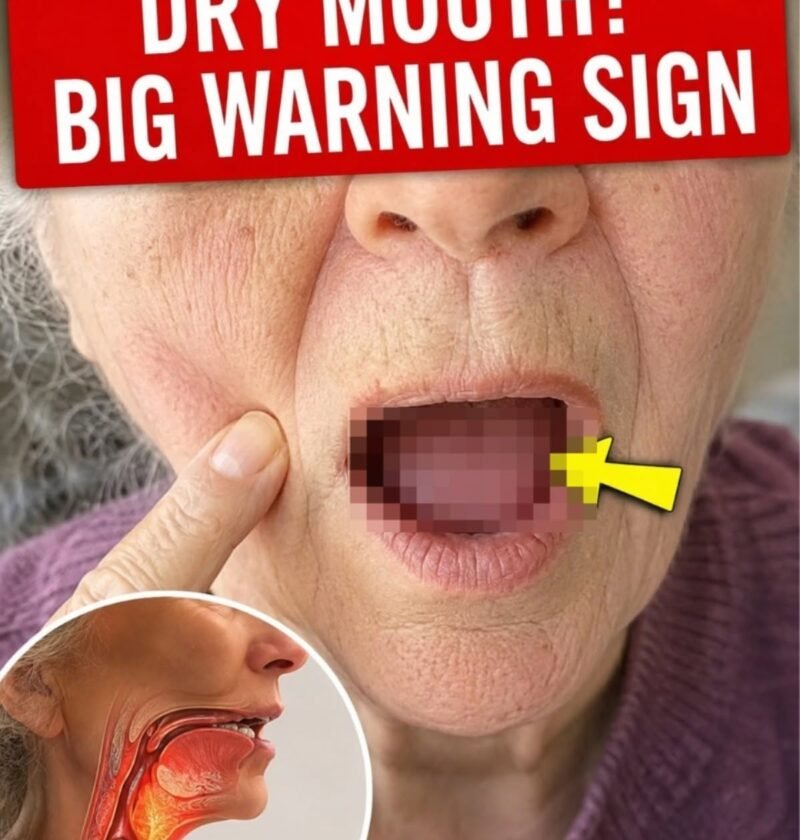
The headline “DRY MOUTH EVERY MORNING? Don’t IGNORE What Your Body Could Be Signaling” is partly reasonable but also somewhat clickbait. Waking with a dry mouth is common and usually not a sign of something serious. (nhs.uk)
🌙 Common reasons you wake up with a dry mouth
- Breathing through your mouth while sleeping — a blocked nose, allergies, snoring, or simply sleeping with your mouth open can dry the mouth. (nhs.uk)
- Not getting enough fluids — dehydration can make saliva thicker and the mouth feel dry.
- Medications — many medicines can cause dry mouth, including some antihistamines, antidepressants, diuretics and other drugs. (UCL Hospitals)
- Alcohol, smoking and excess caffeine can contribute to dryness. (nhs.uk)
- Diabetes can be associated with dry mouth, particularly when accompanied by increased thirst and frequent urination. (NIDDK)
- Sjögren’s syndrome and some other medical conditions can cause persistent dry mouth, often along with dry eyes. (UCL Hospitals)
🦷 Why persistent dryness matters
Saliva protects your teeth and mouth. Chronic dry mouth increases the risk of tooth decay, gum disease, mouth infections and oral thrush. (NIDDK)
What you can try
- Keep water beside your bed and take regular sips.
- Drink enough fluids throughout the day.
- Try sugar-free chewing gum to stimulate saliva.
- Avoid excessive alcohol and smoking.
- Use an alcohol-free mouthwash and brush twice daily with fluoride toothpaste. (nhs.uk)
Don’t stop a prescribed medication just because you suspect it’s causing dry mouth—ask your doctor or pharmacist whether there’s an alternative. (nhs.uk)
When to get checked
If the dryness persists for several weeks, makes eating or speaking difficult, causes painful/red/bleeding mouth tissues, or occurs together with constant thirst, frequent urination, or dry eyes, it’s worth discussing with a healthcare professional. (nhs.uk)
Bottom line: Morning dry mouth most often points to mouth breathing, dehydration, or medication effects, not a hidden serious disease. But persistent symptoms deserve evaluation rather than being dismissed—or treated with a viral “miracle cure.”