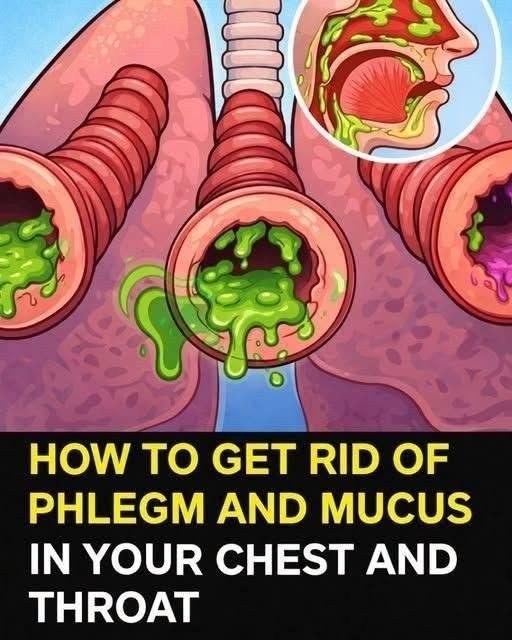
If the phlegm/mucus is from a cold, mild respiratory infection, allergies, or post-nasal drip, you can often loosen it and make it easier to clear at home. nhs.uk+1
Natural ways to loosen mucus
-
Drink plenty of water throughout the day. Fluids help thin mucus so it is easier to cough up. nhs.uk
-
Sip warm drinks such as warm water, tea, broth, or warm lemon water. They can soothe the throat and help with congestion. Mayo Clinic
-
Try honey: about 1 teaspoon in warm water or tea may reduce coughing and soothe an irritated throat. Never give honey to a child under 1 year old. Mayo Clinic
-
Gargle with warm salt water if mucus is irritating your throat. A common mixture is ½ teaspoon of salt in a glass of warm water; gargle and spit it out. nhs.uk
-
Use a cool-mist humidifier or take a warm shower to add moisture to the air and help loosen mucus. Keep humidifiers clean. Mayo Clinic+1
-
Sleep with your head slightly elevated if mucus or coughing is worse when lying down. nhs.uk
-
Avoid smoking and secondhand smoke, which can irritate the airways and worsen mucus and coughing. nhs.uk
-
If mucus is coming from your nose/sinuses, saline nasal rinsing or spray can help clear post-nasal mucus. nhs.uk
Don’t try to completely suppress a productive cough
Coughing helps your body remove mucus from the airways, so gently coughing up phlegm can be useful. Mayo Clinic
When to get medical help
Seek urgent medical care for difficulty breathing, significant chest pain, coughing up blood or pink-tinged mucus, fainting, or severe worsening symptoms. Mayo Clinic
See a clinician if the cough lasts more than about 3 weeks, keeps worsening, or is accompanied by persistent fever, wheezing, shortness of breath, or significant green/yellow phlegm. Mayo Clinic+1
If you tell me how long you’ve had the mucus, its color (clear/white/yellow/green), whether you have cough/fever, and whether it’s mainly in your throat or chest, I can help you narrow down the likely cause and what to do next.