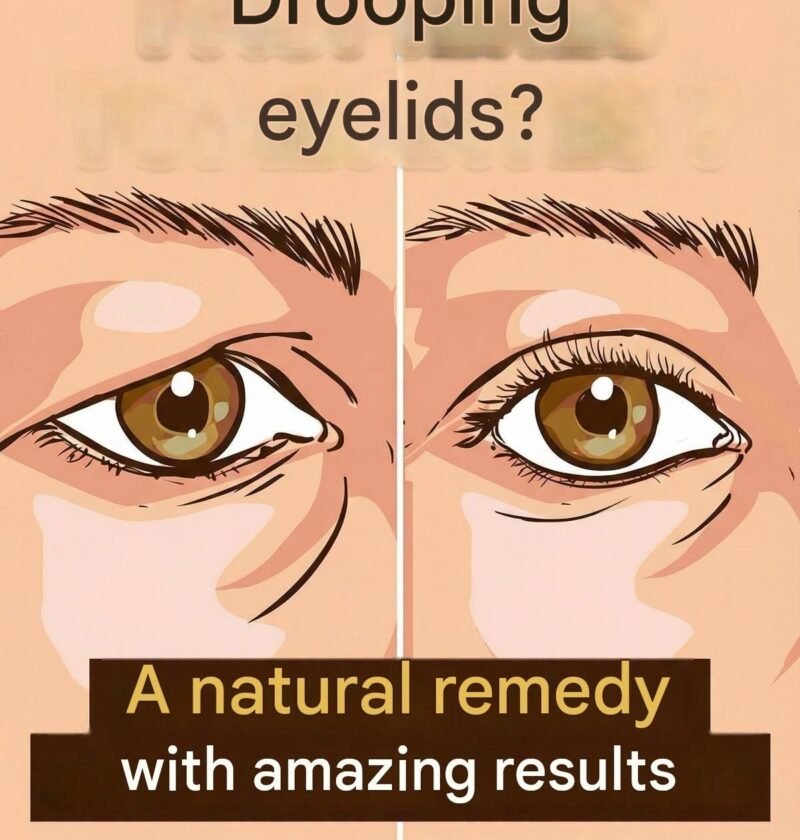
Droopy eyelids—whether referred to cosmetically as hooding or medically as ptosis—are a very common part of getting older. Over time, the skin around the eyes loses elasticity, the underlying orbicularis oculi muscle weakens, and the tiny tendon that lifts the eyelid can stretch out.
While natural remedies can help improve skin tone, reduce puffiness, and temporarily refresh the appearance of the eye area, it is vital to know when a droopy lid is just a sign of normal aging versus a medical signal that requires attention.
Natural Ways to Support and Improve Eye Area Appearance
-
Targeted Hydration and Collagen Support
-
The skin on your eyelids is the thinnest on your entire body. Using a lightweight, peptide-rich eye cream or serums containing hyaluronic acid helps lock in moisture and temporarily plumps fine lines, making the skin look firmer and more resilient.
-
-
Cold Compresses or Chilled Green Tea Bags
-
If your eyelids look heavier in the morning due to fluid retention or mild inflammation, applying a chilled compress or used green tea bags for 10 minutes can constrict blood vessels and reduce puffiness, instantly opening up the eye contour.
-
-
Gentle Lymphatic Drainage Massage
-
Using your ring finger, gently tap or sweep from the inner corner of your eye outward along the brow bone. This encourages lymphatic drainage, reduces fluid stagnation, and relieves tightness in the surrounding muscles.
-
-
Protect Against UV Damage and Wear Sunglasses
-
UV rays break down collagen and elastin fibers rapidly. Wearing UV-blocking sunglasses and applying a gentle, mineral-based sunscreen around the orbital bone prevents premature skin sagging.
-
Understanding the Difference: Sagging Skin vs. True Ptosis
It helps to distinguish between two different phenomena:
-
Dermatochalasis (Skin Hooding): This is the natural accumulation of excess, loose skin that folds down over the eyelid crease due to aging and loss of skin elasticity.
-
True Ptosis: This occurs when the actual muscle or tendon responsible for lifting the eyelid (the levator palpebrae superioris) stretches or detaches, causing the margin of the eyelid itself to droop downward and potentially block part of your vision.
When to See a Doctor (Red Flags)
While age-related skin hooding is harmless, you should schedule an evaluation with an optometrist, ophthalmologist, or primary care physician if you notice:
-
Sudden Onset: If a droopy eyelid develops rapidly (over the course of hours or days), it can occasionally indicate a neurological issue, nerve compression, or muscle weakness and requires immediate medical assessment.
-
Obstructed Vision: If the upper lid hangs low enough to block your upper field of vision, forcing you to tilt your head back to see clearly.
-
Associated Neurological Symptoms: If the drooping is accompanied by double vision, weakness in your face or limbs, severe headaches, or pupillary asymmetry (one pupil noticeably larger than the other).
Are you noticing mild morning puffiness and skin laxity, or has a eyelid change happened rather suddenly?