The idea of replacing the traditional, invasive colonoscopy with a completely non-invasive alternative has been one of the most exciting frontiers in preventative medicine. While traditional colonoscopies remain the gold standard because doctors can remove polyps on the spot, recent innovations are making screening vastly more accessible.
These breakthrough methods fall primarily into three categories:
1. Advanced Blood-Based Biomarker Tests (e.g., Cell-Free DNA)
-
How it works: Recent FDA approvals for blood-based colorectal cancer screening tests (like the Shield blood test) allow doctors to detect circulating tumor DNA shed into the bloodstream by colorectal lesions.
-
The Benefit: It requires nothing more than a standard routine blood draw during an annual check-up—completely eliminating bowel preps, dietary restrictions, and sedation.
-
The Catch: While exceptional at detecting active cancers, they are generally recommended every few years as a frontline screening tool, and anyone who tests positive still requires a follow-up traditional colonoscopy to locate and remove polyps.
2. Next-Generation Microbiome and Stool Tests (AI-Powered)
-
How it works: Advanced stool-based tests (like improved multi-target stool RNA and DNA tests, as well as cutting-edge AI microbiome tracking) analyze biological markers and specific bacterial patterns linked to cancerous cells.
-
The Benefit: Done entirely at home with high sensitivity rates for catching cancer markers without ever stepping foot in a clinic for a procedure.
-
The Catch: Like blood tests, they are screening and triage mechanisms; they cannot treat, biopsy, or remove polyps proactively during the test itself.
3. CT Colonography (Virtual Colonoscopy)
-
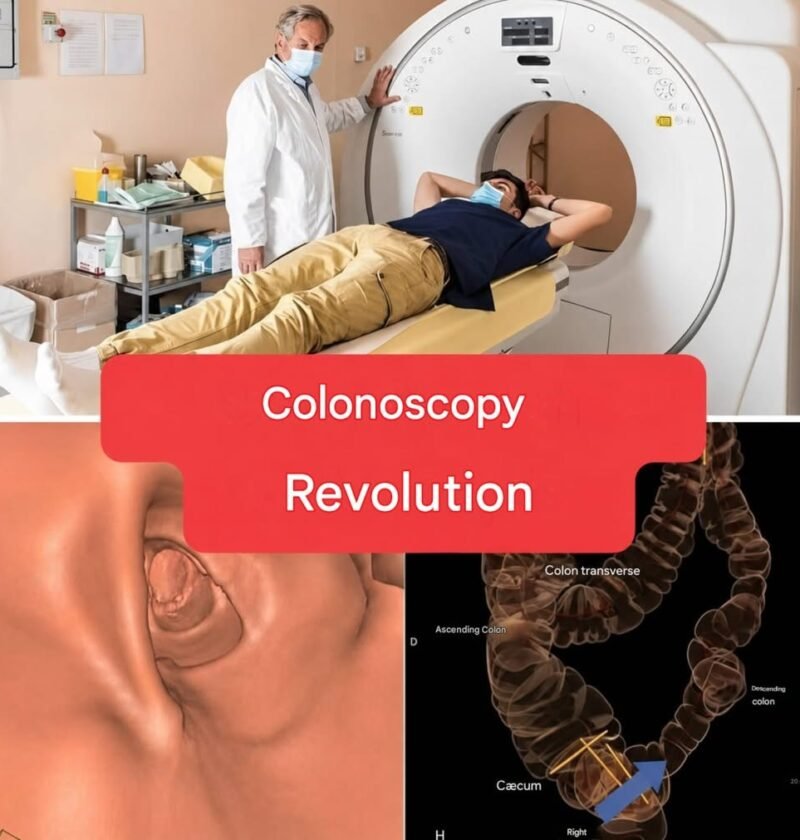
How it works: This uses a specialized low-dose computed tomography (CT) scanner combined with advanced 3D computer software to create a detailed “fly-through” view of the inside of the colon.
-
The Benefit: It takes only 10 to 15 minutes, requires no IV sedation or anesthesia, and allows most patients to drive themselves home immediately afterward.
-
The Catch: It still typically requires a thorough bowel preparation beforehand, and if a suspicious polyp or growth is detected on the scan, you must still undergo a standard optical colonoscopy to have it removed.
What This Means for Patients
These non-invasive breakthroughs are transforming preventative care by breaking down the psychological and physical barriers that cause millions of people to skip their routine screenings entirely.
Are you interested in exploring these non-invasive screening options, or wondering how they compare for someone over 60?