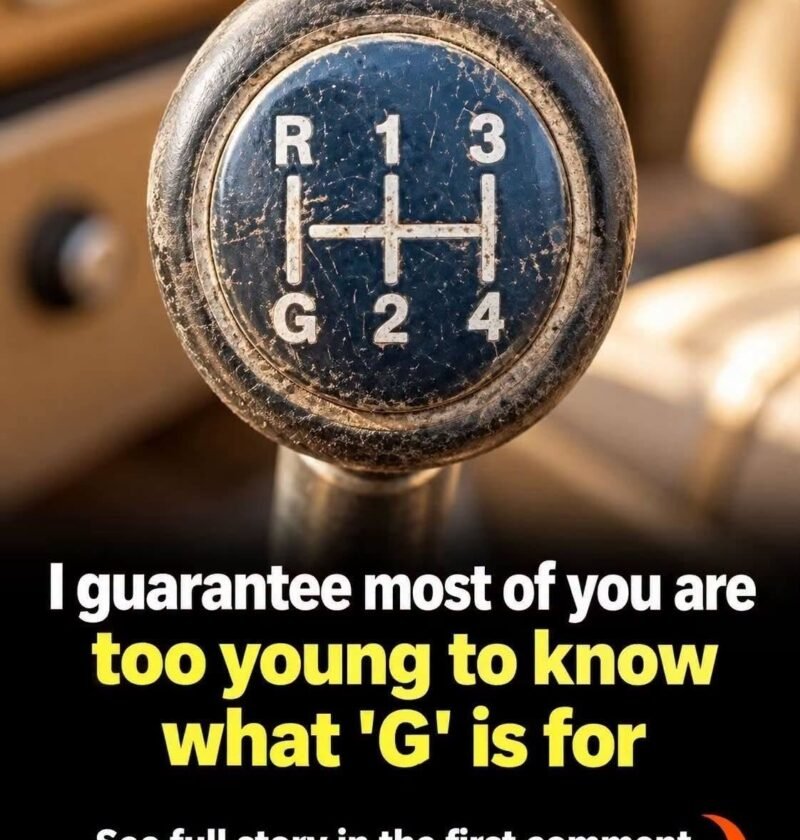
On a manual transmission shift knob, “G” stands for Geländegang—a German term that translates to “off-road gear” or “terrain gear” (commonly called a crawler gear in English).
You will most often find it in European trucks, vans, and rugged 4x4s—most famously the Mercedes-Benz G-Wagen (G-Class), Unimog, and older Volkswagen Syncro vans (such as the VW Vanagon Syncro).
How the “G” Gear Works
-
Ultra-Low Gear Ratio: It sits below 1st gear, delivering massive torque multiplication at a very slow wheel speed.
-
Built for Heavy Loads & Steep Terrain: Drivers use it when crawling over rocks, climbing steep inclines, driving through deep mud or snow, or pulling a heavy trailer from a dead stop without burning up the clutch.
-
Skip It in Normal Driving: On flat pavement under normal conditions, you bypass “G” completely and start directly in 1st gear. Engaging “G” on a regular road will rev the engine to its limit at just a few miles per hour.
Other Uncommon Shift Knob Letters
If you ever hop into an older or specialized manual vehicle, you might also run into a few other rare markings:
| Letter | Stands For | What It Does |
| G | Geländegang (Terrain/Crawler) | Ultra-low gear for steep off-road climbs or heavy towing. |
| C | Crawler | The English equivalent of “G,” found on heavy-duty pickups (like older Ford and GM trucks) and commercial rigs. |
| L | Low | Similar to a crawler gear, designed for maximum pulling power at low speeds. |
| E | Econo / Economy | An overdrive gear (often replacing 4th or 5th on 1980s VWs and Audis) tuned to lower engine RPMs and save fuel on the highway. |
| S | Sport or Second | Depending on the vehicle, either a closer-ratio top gear for performance or a dedicated 2nd-gear start for slippery snow/ice. |