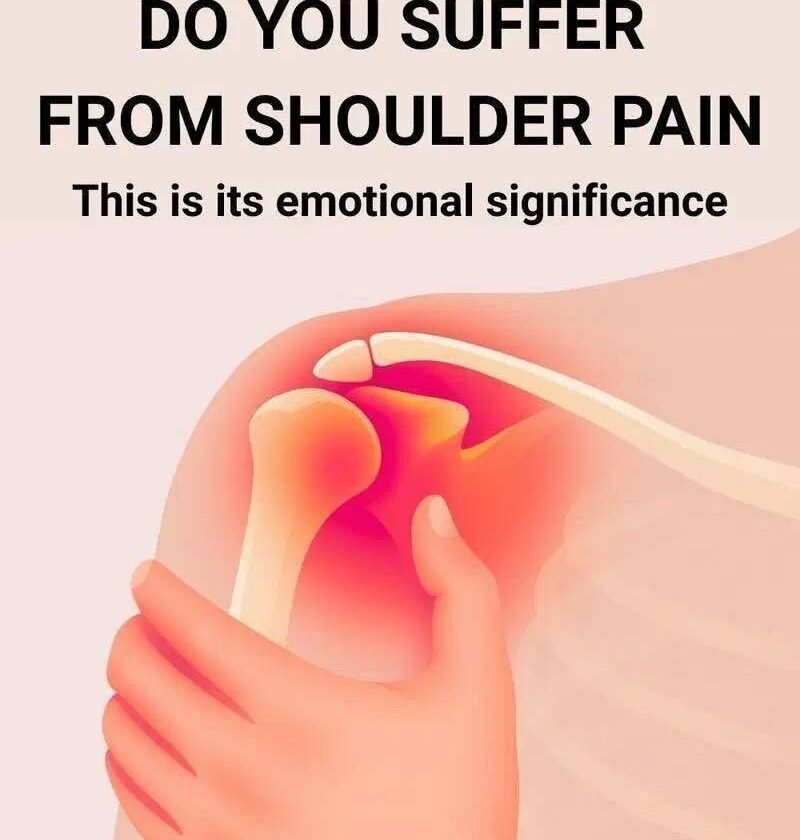
“Does Your Shoulder Hurt? Here’s What It Means Emotionally…”
This kind of headline is usually based on the idea that different body parts supposedly represent particular emotions—for example, shoulder pain meaning that you’re “carrying too many burdens” or having difficulty letting go.
That’s an interesting metaphor, but there is no reliable medical evidence that pain in a particular shoulder reveals a specific emotion or unresolved emotional issue.
What can actually cause shoulder pain?
Shoulder pain can come from many physical problems, including:
Rotator-cuff tendinitis or tears
Bursitis
Arthritis
Frozen shoulder
Muscle strains
Neck or nerve problems
Previous injury
Overuse or repetitive movements
Shoulder pain can also occasionally be referred from another part of the body, including the neck, chest, or abdomen.
M
Mayo Clinic
+1
🧠 Can emotions contribute to shoulder pain?
Yes—but that’s different from saying the pain has a specific emotional meaning.
Stress can cause muscles to remain tense, and prolonged muscle tension can contribute to or intensify pain. Pain and stress can also reinforce one another: pain increases stress, while stress can make pain feel worse.
M
Mayo Clinic
+1
So if you’re under considerable stress and your shoulders feel tight, relaxation, appropriate movement, sleep, and stress-management techniques may help. But don’t assume that emotional stress is the cause without considering physical explanations.
🚨 Don’t dismiss shoulder pain as “emotional”
This is particularly important with new, unexplained shoulder pain. Shoulder discomfort accompanied by chest pressure, shortness of breath, sweating, nausea, dizziness, or pain spreading to the arm, jaw, back, or shoulder can be a warning sign of a heart attack and requires emergency medical attention.
M
Mayo Clinic
+1
Bottom line: Your shoulder pain may be affected by stress, but there is no scientifically established map saying “right shoulder = one emotion” or “left shoulder = another.” Look for the actual cause rather than blaming yourself or your emotions.
M
Sources