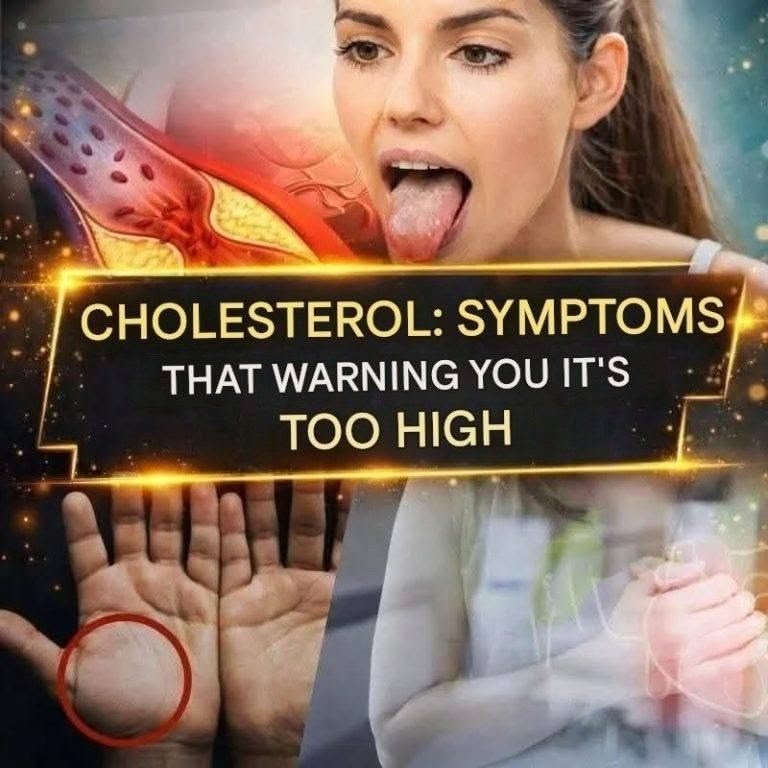
High cholesterol is notoriously called a “silent condition” because elevated LDL (“bad”) cholesterol circulating in your bloodstream typically produces no outward physical symptoms for years. It quietly builds up inside your artery walls as plaque (atherosclerosis) without giving you a headache, making you tired, or causing obvious pain.
However, when cholesterol levels remain dangerously high over a long period or when plaque accumulation begins to restrict blood flow, your body can start sending out subtle physical warnings.
Here are five lesser-known and visible signs that may indicate your cholesterol is too high:
1. Yellowish Cholesterol Deposits on the Eyelids (Xanthelasma)
-
What it looks like: Soft, yellowish, flat or slightly raised bumps or plaques that form on or around your eyelids, particularly near the inner corner closest to your nose.
-
Why it happens: These are localized deposits of cholesterol-laden fat cells just beneath the skin. While they are harmless on their own, finding them is a major clinical red flag: up to half of the people who develop xanthelasma have underlying lipid disorders or chronically high cholesterol.
2. Firm, Yellow Bumps on Tendons (Xanthomas)
-
What it looks like: Firm, painless lumps or nodules under the skin, most commonly appearing over the knuckles of your hands, the Achilles tendon in the back of your ankle, or your knees.
-
Why it happens: Similar to eyelid deposits, severe excess cholesterol in the bloodstream can accumulate in soft tissues and tendons. This is frequently linked to genetic conditions like familial hypercholesterolemia, which causes dangerously elevated cholesterol from a young age.
3. A Grayish-White Ring Around the Cornea (Arcus Senilis)
-
What it looks like: A distinct white, gray, or yellowish opaque ring or arc appearing around the colored part (iris) of your eye, sitting just inside the outer edge of the cornea.
-
Why it happens: This ring forms due to cholesterol and lipid deposits accumulating in the peripheral cornea. While it can be a normal part of aging for older adults (often appearing after age 60), seeing it in younger individuals strongly points toward high blood cholesterol or triglycerides.
4. Aching, Heaviness, or Cramping in the Legs During Movement (Claudication)
-
What it looks like: A cramping, aching, or tired feeling in your calves, thighs, or buttocks that consistently flares up when you walk or climb stairs, but disappears after a few minutes of rest.
-
Why it happens: This is a classic symptom of Peripheral Artery Disease (PAD). When high cholesterol builds up into hardened plaque in the arteries supplying your legs, it chokes off adequate blood and oxygen delivery during physical exertion.
5. Unexplained Chest Tightness or Angina Under Exertion
-
What it looks like: A dull pressure, squeezing, or heavy ache in the center of your chest that occurs when you exert yourself physically (like carrying groceries or walking uphill) and subsides when you stop.
-
Why it happens: This indicates that cholesterol plaque buildup has narrowed the coronary arteries feeding your heart muscle, reducing blood flow when your heart needs oxygen the most.
🩸 The Diagnostic Reality:Because most people with high cholesterol have zero physical symptoms, waiting for visible signs like xanthelasma or leg cramps is risky. The only definitive way to know your numbers is through a simple routine blood test called a lipid panel, which measures your total cholesterol, LDL, HDL, and triglycerides.