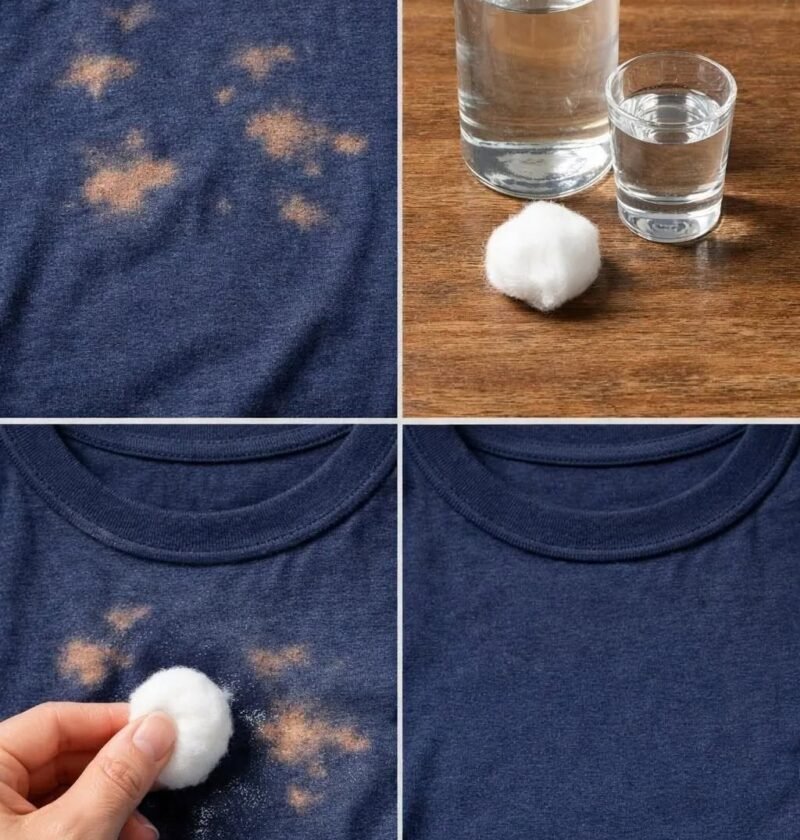
Headlines promising “Bleach stains on your clothes? No need to throw them away: here’s the solution” take a frustrating laundry mishap and sell an overly neat fix. In reality, household chlorine bleach (sodium hypochlorite) doesn’t just sit on top of fabric like a removable spot—it chemically oxidizes and strips dye molecules out of the fibers. Once the dye is destroyed, no household “eraser” or soap can magically put the original color back.
What a real “solution” looks like depends on what kind of fabric is involved and whether the color was actually bleached out versus yellowed or stained by something else. Sometimes you can rescue the garment—by re-dyeing, intentionally tie-dyeing/over-dyeing, or covering/repurposing the spot—while on certain fabrics or delicate colors, the damage is permanent.
What Actually Works vs. What Viral “Fixes” Promise
| Approach | When It Can Actually Help | Why It Often Disappoints |
| Over-Dyeing or Tie-Dyeing | Works best on natural fibers like 100% cotton, linen, hemp, or rayon/viscose, especially if the bleached mark is uneven or near a seam. | Synthetic fabrics (polyester, nylon, acrylic) resist standard home dyes, and stitched threads (often polyester) may stay a different color than the fabric. |
| Fabric Markers / Touch-Up Pens | Helpful for tiny, sharp pin-dots or small marks on solid-colored cotton or canvas items where a close shade match exists. | Larger spots often show a distinct patch or sheen difference in daylight, and markers can fade or bleed after washing. |
| Intentional Design / Repurposing | Great for turning a ruined shirt or towel into a patterned/bleached-look piece, a patch/embroidery spot, or a cleaning rag if it isn’t worth rescuing. | Doesn’t restore a crisp, uniform original garment—it changes the look intentionally. |
| Viral “Bleach Remover” Hacks | Occasionally a yellowish mark on white fabric is not bleach at all (e.g., rust, sunscreen, or buildup), where targeted stain treatment helps. | True bleach spots on colored clothes are missing pigment, not holding extra stain—so extra scrubbing or vinegar won’t restore the lost dye. |
Why “One-Step Bleach Rescue” Posts Are Usually Oversimplified
-
Dye Stripping vs. Surface Staining: Most everyday stains add pigment or oil to fabric and can be lifted or broken down. Bleach removes existing color—so “getting the stain out” isn’t the same as restoring original dye.
-
Fiber Chemistry Matters: Cotton and linen take dye readily, whereas polyester blends and certain garment treatments respond unpredictably or unevenly.
-
Weakened Fibers: Heavy or repeated bleach exposure can also weaken or stiffen fabric fibers over time, not just alter color.
Practical Steps If You Just Splashed Bleach
-
Rinse or Neutralize Quickly: If bleach just hit the fabric, flush it thoroughly with cool water right away to limit further fiber damage, and wash separately so bleach residue doesn’t transfer to other items.
-
Inspect Before Trying a Fix: Check whether the spot is on a natural or synthetic fiber, how large and visible it is, and whether re-dyeing or turning it into a casual/utility piece makes sense for what the item is worth.
If you’re dealing with a specific bleached item—tell me the fabric type, color, and size of the mark—and we can figure out the most realistic way to save or repurpose it.