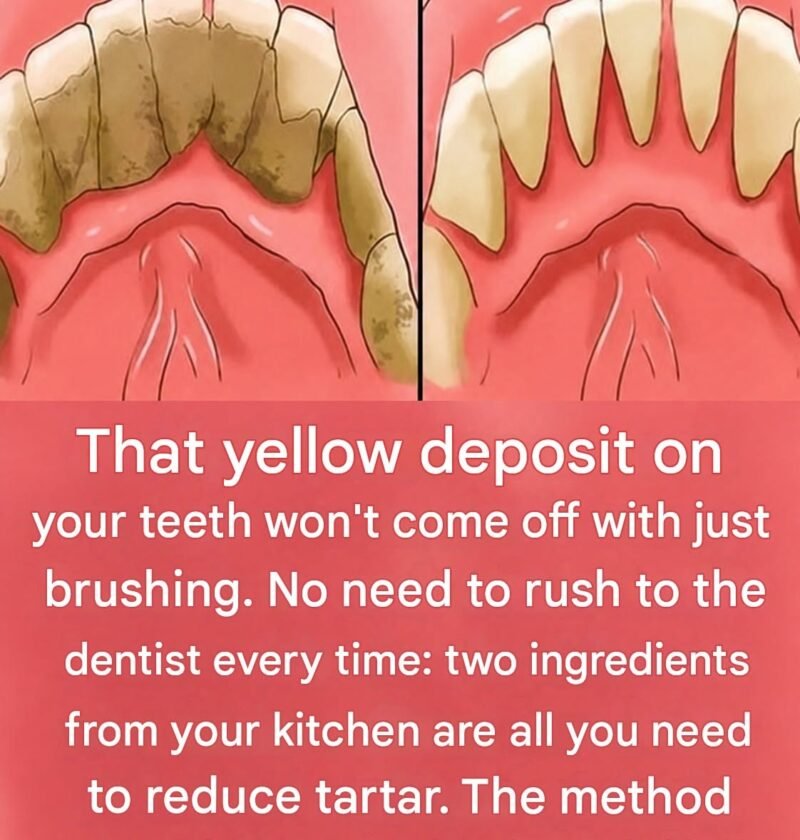
Can you remove tartar at home?
Be careful with the phrase “be your own dentist.” There are safe ways to reduce plaque and prevent additional tartar, but hardened tartar (dental calculus) generally cannot be safely removed at home once it has firmly attached to the teeth.
What you can safely do
Brush twice daily for about two minutes with fluoride toothpaste.
Clean between your teeth daily with floss or interdental brushes.
An antiseptic or fluoride mouthwash can be a useful addition, but it doesn’t replace brushing and interdental cleaning.
If you have removable dental appliances, clean them according to your dentist’s instructions.
Regular professional dental cleanings can remove calculus that brushing can’t.
Avoid DIY “tartar removal” tricks
Don’t scrape your teeth with metal dental instruments, needles, knives, fingernails, or other sharp objects. You can cut your gums, damage enamel, or push bacteria under the gumline.
Also be cautious with viral recipes involving lemon juice, vinegar, hydrogen peroxide, or large amounts of baking soda. Acid can erode enamel, and overly abrasive cleaning can permanently damage the tooth surface.
What is the difference between plaque and tartar?
Plaque is a soft bacterial film that can be removed with brushing and interdental cleaning. If it isn’t removed, minerals in saliva can harden it into tartar/calculus. Once hardened, professional scaling is usually needed.
If you have bleeding or swollen gums, persistent bad breath, loose teeth, gum recession, or significant tartar, arrange a dental examination rather than trying to scrape it off yourself.
Bottom line: 🦷 You can be your own plaque-prevention specialist, but safely removing established tartar is a job for a dental professional.