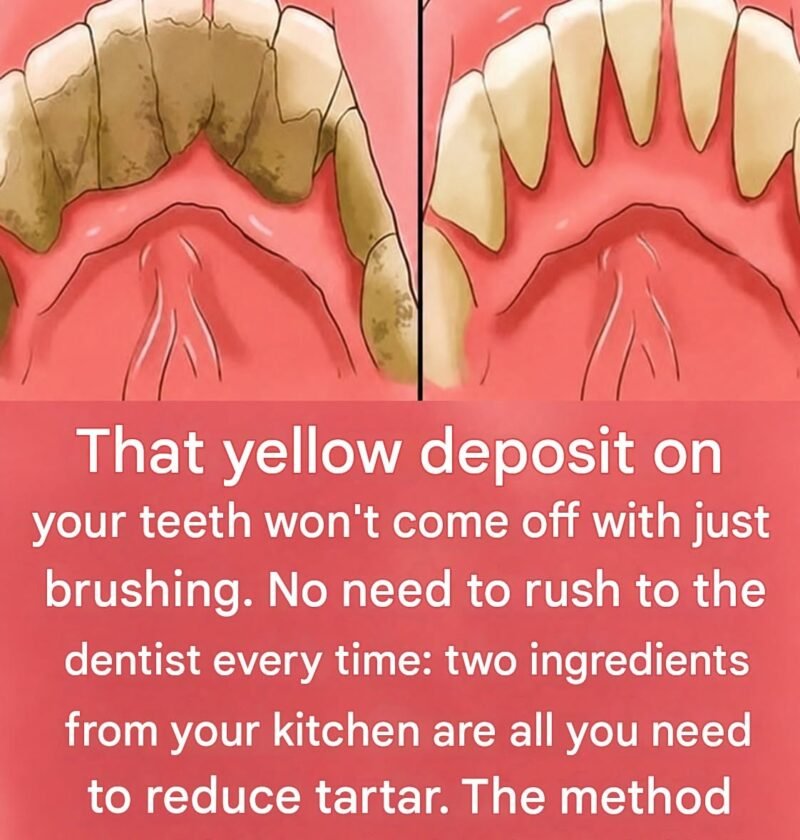
You can do a lot at home to prevent plaque and slow tartar buildup, but you can’t safely remove hardened tartar (calculus) completely yourself. Once plaque mineralizes, a dentist or dental hygienist generally needs to remove it with professional instruments.
What you can safely do at home
-
Brush twice daily for about 2 minutes with fluoride toothpaste and a soft-bristled toothbrush. Angle the brush toward the gumline and use gentle movements.
-
Clean between your teeth every day with floss or appropriately sized interdental brushes. This is especially important because a toothbrush can’t adequately reach these spaces.
-
Consider an electric toothbrush if it helps you clean consistently and thoroughly.
-
Rinse with water after meals if you can’t brush immediately, particularly after sticky or sugary foods.
-
Limit frequent sugary snacks and drinks, which encourage plaque formation.
-
Don’t scrape tartar with metal tools, pins, fingernails, or sharp objects. You can injure your gums, damage enamel, or introduce infection.
-
Don’t use concentrated vinegar, lemon juice, or undiluted peroxide to dissolve tartar. Acids can erode enamel and irritate your gums.
When professional cleaning is needed
If you can see hard yellow, brown, or dark deposits attached to the teeth, especially along the gumline, that’s likely calculus rather than ordinary plaque. Home brushing won’t reliably remove it. Professional scaling can remove it safely.
If you have bleeding/swollen gums, persistent bad breath, loose teeth, pus, or significant tooth pain, arrange a dental examination rather than trying to scrape the deposits away yourself.