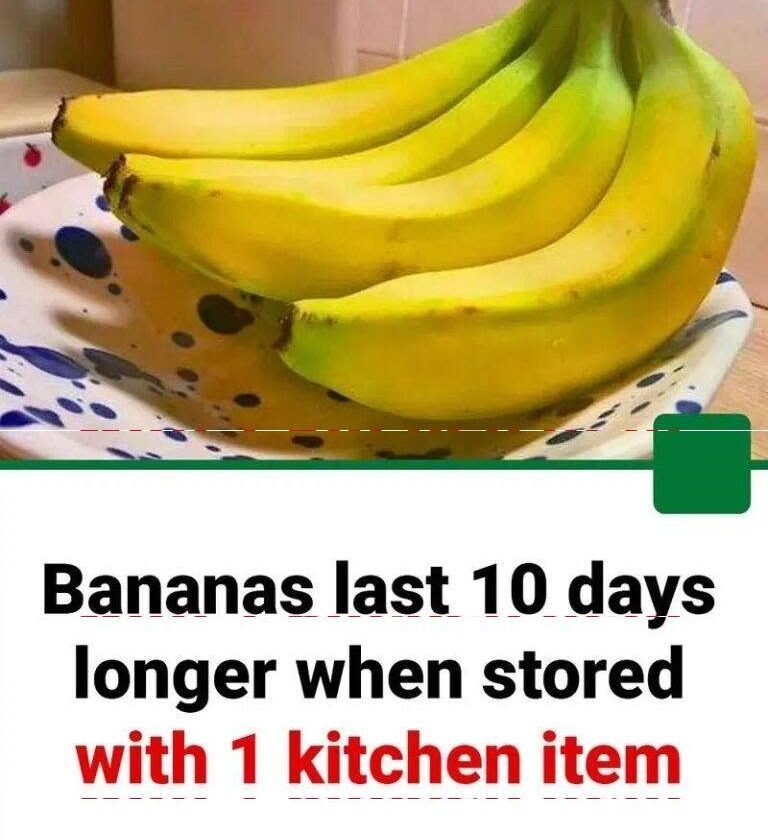
The headline is referring to a common banana-storage trick: covering the banana stems with plastic wrap rather than leaving the bunch exposed in a fruit bowl.
🍌 Why it can work
Bananas naturally produce ethylene, a plant hormone that promotes ripening. A significant amount of ethylene is released around the stem area. Covering the stems can reduce how quickly ethylene spreads around the fruit, potentially slowing ripening.
How to do it
-
Separate the bananas if you want maximum effect, although wrapping the whole bunch can also help.
-
Tear off a small piece of plastic wrap/cling film.
-
Wrap it tightly around the stem/crown of each banana.
-
Keep the bananas at room temperature, away from direct sunlight and heat.
-
Once they reach your preferred ripeness, move them to the refrigerator. The peel may turn brown or black, but the flesh can remain good for considerably longer.
Does it really make them last 10 days longer?
That “10 days longer” claim should be treated cautiously. Storage conditions, banana variety, starting ripeness, temperature, and handling all make a big difference. Stem wrapping can slow ripening, but it isn’t a guaranteed extra 10 days.
Also, putting bananas in a fruit bowl isn’t inherently bad—the bigger issue is that bananas produce ethylene, and keeping them together with other ethylene-sensitive fruits can accelerate ripening.
Practical tip: If you want bananas to last as long as possible, buy them at different stages of ripeness, keep them away from apples/avocados/other ripening fruit, wrap the stems, and refrigerate them once they’re ripe.