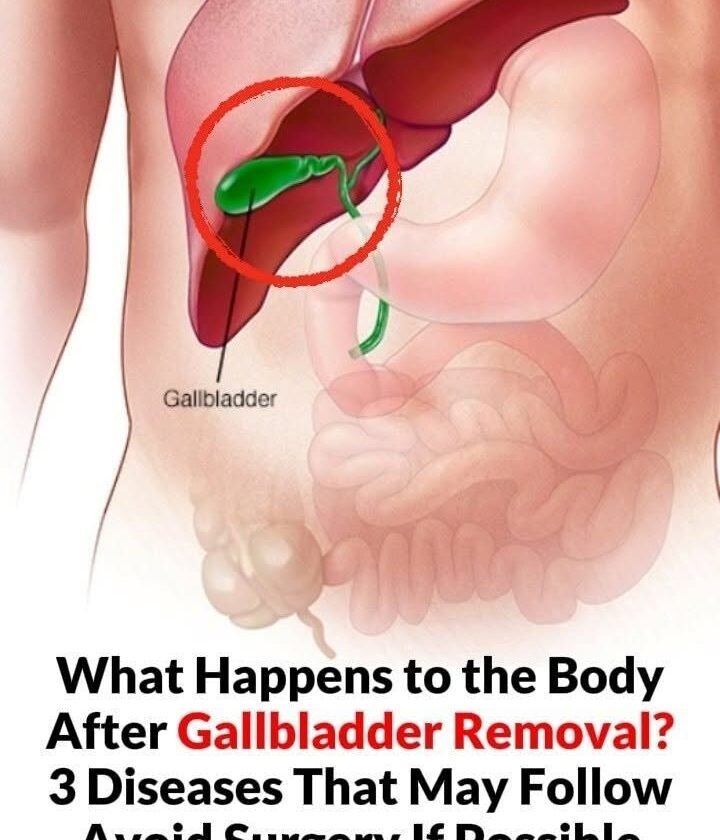
That headline is a textbook example of fear-based medical clickbait—using alarming language to discourage necessary surgery by exaggerating potential post-operative outcomes.
While removing the gallbladder (cholecystectomy) does change how your body processes fats, framing it as a procedure you should “avoid when possible” ignores the fact that a diseased, inflamed, or stone-filled gallbladder can quickly become a life-threatening medical emergency.
Here is a realistic look at what actually happens after gallbladder removal, the conditions sometimes associated with it, and why doctors recommend the surgery when it’s truly needed.
What Your Gallbladder Does (and Why It’s Optional)
Your gallbladder is a small, pear-shaped organ that sits just under your liver. Its primary job is to store and concentrate bile—a digestive fluid produced by the liver that helps break down fats.
However, your liver produces bile continuously, whether you have a gallbladder or not. When the gallbladder is removed, bile simply drips continuously into your small intestine instead of being released in concentrated bursts when you eat a fatty meal. For the vast majority of people, the digestive system adapts seamlessly to this change.
The 3 Post-Surgery Conditions Mentioned in Viral Claims
While some people experience digestive shifts after surgery, calling them inevitable “conditions you will develop” is a major exaggeration. The most common post-operative experiences include:
-
Post-Cholecystectomy Syndrome (PCS): This is an umbrella term for symptoms that persist or appear after surgery—such as indigestion, gas, bloating, or right upper quadrant abdominal pain. In many cases, these symptoms happen because the original pain was actually coming from a different source (like the bile ducts or bowel) to begin with, rather than the gallbladder alone.
-
Bile Acid Malabsorption (Chronic Diarrhea): Because bile now flows continuously into the intestines rather than being stored, some people experience looser stools or frequent bowel movements after eating fatty foods. For most, this improves over time as the body adjusts, though a small percentage require medication to bind excess bile acids.
-
Fat Intolerance (Temporary): Right after surgery, heavy, greasy, or deeply fried foods can sometimes trigger sudden urgency or mild cramping because your digestive system is temporarily adjusting to a steady, non-concentrated flow of bile. This usually resolves within a few weeks to months.
Why “Avoiding the Surgery” Can Be Dangerous
When a doctor recommends removing a gallbladder, it is almost never done lightly. It is typically because the organ is failing, chronically inflamed, or blocked by gallstones.
Avoiding surgery when a gallbladder is genuinely diseased can lead to severe, life-threatening complications, including:
-
Acute Cholecystitis: A severe, painful inflammation or infection of the gallbladder that can cause the organ to rupture.
-
Blocked Bile Ducts (Choledocholithiasis): Gallstones escaping into the main bile ducts, leading to dangerous blockages, severe jaundice, or liver damage.
-
Gallstone Pancreatitis: A agonising and potentially fatal inflammation of the pancreas caused by a gallstone blocking the pancreatic duct.
The Bottom Line
Gallbladder surgery is one of the most common and safe elective procedures performed today. While minor digestive adjustments can happen, they are a far cry from the catastrophic picture painted by viral headlines—and they are infinitely preferable to the risks of leaving a severely diseased gallbladder in place.
Are you or someone you know preparing for gallbladder surgery, or were you just digging into another viral health claim?