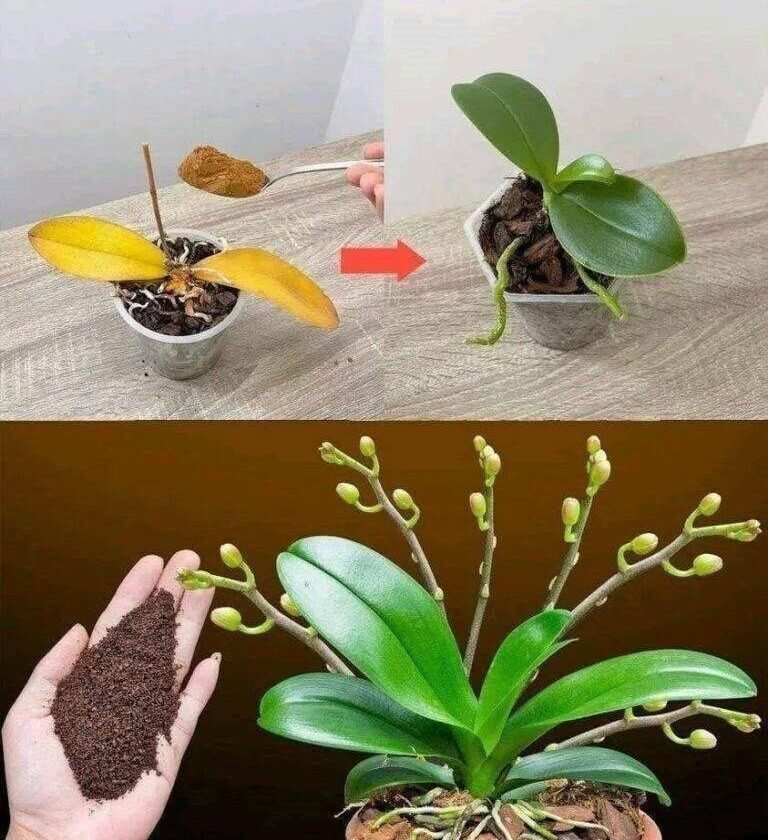
The internet loves a dramatic gardening secret—especially ones promising that a single household kitchen ingredient (like leftover coffee grounds, cinnamon, or rice water) will magically shock a stubborn, dormant orchid into a massive explosion of flowers overnight.
While orchids are notoriously dramatic plants that require specific environmental cues to bloom, dumping random kitchen scraps into their pots usually does more harm than good.
Here is the horticultural reality behind viral orchid-blooming hacks, what actually triggers an orchid to flower, and how to care for them properly.
The Hard Truth About “Miracle” Kitchen Hacks
Viral videos often recommend pouring things like diluted milk, vinegar, coffee, or Epsom salt water directly into orchid media to force blooms.
-
The Risk to Roots: Orchids (specifically popular epiphytic varieties like Phalaenopsis) do not grow in normal garden soil. In the wild, their roots cling to tree bark, absorbing moisture from the air and requiring rapid, complete drainage. Pouring sugary, acidic, or heavy organic liquids over them rots the delicate root system, attracts fungus gnats, and throws off the pH balance of the potting media.
What Actually Triggers an Orchid to Bloom
Orchids don’t respond to magical single-ingredient “spells.” Instead, they initiate flower spikes based on specific biological triggers that mimic their natural tropical habitat:
-
The Temperature Drop (The Diurnal Shift): This is the single most reliable trigger for Phalaenopsis orchids. In nature, a sudden transition into a cooler season involves warm days and noticeably cooler nights. To trigger a bloom indoors, exposing your orchid to a consistent temperature drop of 10°F to 15°F (around 5°C to 8°C) at night for a few weeks signals the plant that it is time to reproduce, prompting it to push out a flower spike.
-
Proper Light Levels: Orchids need bright, indirect sunlight. If your orchid has dark green, floppy leaves, it is getting too little light and will never muster the energy to flower. If the leaves are yellowing or tinged with red, it’s getting burned.
-
The Right Fertilizer (Low Nitrogen): During their growing season, orchids need a balanced, water-soluble fertilizer specifically formulated for orchids. However, high-nitrogen fertilizers will only push out massive, lush green leaves while completely shutting down flower production. When you want blooms, switch to a “bloom booster” fertilizer with higher phosphorus.
The Safest Way to Nourish an Orchid
If you want to support your orchid naturally without risking root rot from viral DIY concoctions:
-
Water with the “Ice Cube” Myth vs. Soaking: While some people drop ice cubes on orchid roots, tropical plants prefer room-temperature water. The safest method is to take the inner pot to the sink, thoroughly soak the roots with lukewarm water until they turn bright green (grayish roots mean it’s thirsty), and let it drain completely before putting it back.
-
Repot When Needed: If your orchid hasn’t bloomed in years and the potting medium has broken down into soggy dirt, it’s suffocating. Repot it in coarse orchid bark rather than soil to give its roots the airflow they desperately need.