Why “Teaspoon Hacks” Can Backfire
-
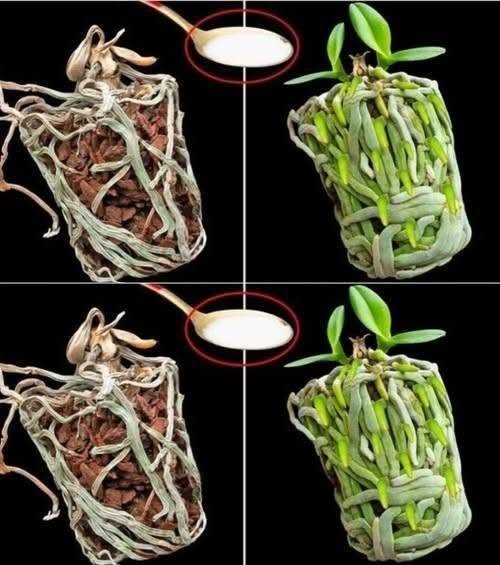
Cinnamon powder: Often recommended as a natural antifungal on freshly cut, healthy tissue. While a light dusting on a clean trim wound can help dry the cut, dumping a teaspoon of cinnamon directly into orchid bark or onto healthy roots can actually dehydrate living tissue further and stunt new root tips.
-
Coffee grounds or vinegar: Acidify the growing medium and break down bark faster, suffocating delicate orchid roots and trapping moisture where air should circulate.
-
Sugar or rice water: Introduces simple sugars into damp, stagnant bark, creating a ideal environment for mold, bacteria, and fungus that rot remaining roots.
What Actually Revives a Withered Orchid
1. Trim Dead Roots  -->  2. Repot in Fresh Bark  -->  3. Hydrate & Humidity  -->  4. Warmth & Indirect Light
(Remove brown/mushy    (Use coarse orchid bark     (Soak bark briefly;         (Keep around 65-80°F
 or hollow roots)       to allow root aeration)     use a humidity tray)        under bright light)
-
Unpot and Inspect: Gently take the plant out of its container and remove all old, decaying moss or bark.
-
Trim Damaged Tissue: Use sterilized scissors to clip off mushy, black, or hollow papery roots. Keep any roots that feel firm and plump, even if they look yellow or pale from lack of light.
-
Repot in Fresh, Coarse Medium: Place the plant in fresh, well-draining orchid bark (or a coarse bark/perlite mix) in a clear pot with generous drainage holes.
-
Boost Ambient Humidity: Instead of overwatering dry bark, place the potted orchid near a room humidifier or on a gravel tray filled with water (ensuring the bottom of the pot never sits directly in standing water).
-
Provide Light & Patience: Keep the orchid in bright, indirect light at warm room temperatures. New root tips will appear as small, bright-green or red-tipped nubs near the base of the stem over 4 to 8 weeks.