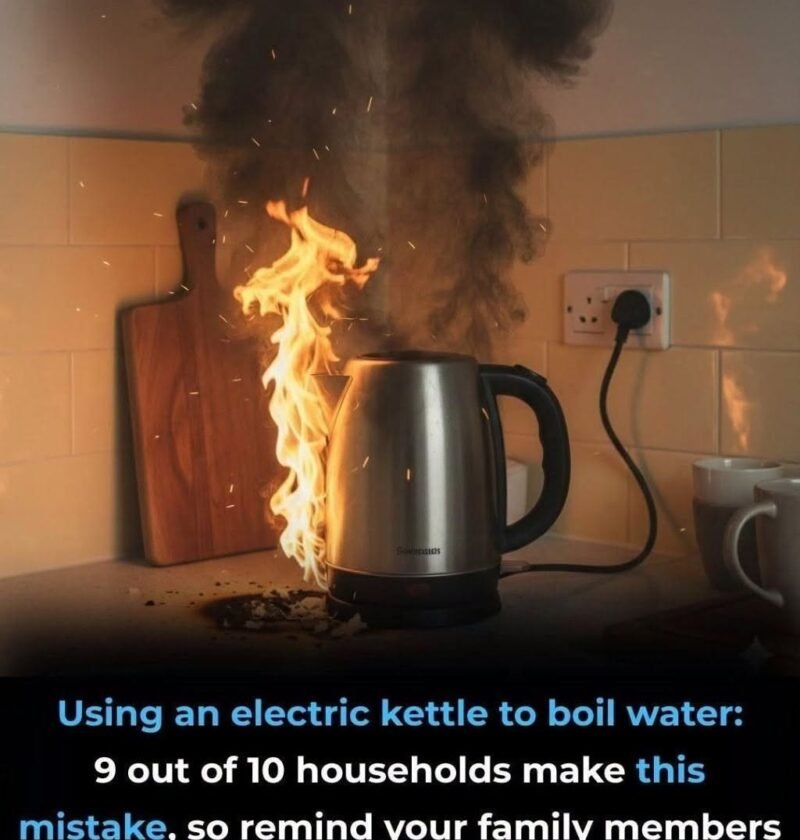
⚡ Electric Kettle: A Common Mistake to Avoid
If you’re referring to the viral warning about leaving an electric kettle with water sitting in it, there is a useful point—but the claim that “9 out of 10 households” make the mistake isn’t a verified statistic.
The better habit
After boiling water:
- Pour out leftover water if you don’t plan to use it.
- Let the kettle cool and empty it regularly rather than repeatedly reheating the same water.
- Follow the manufacturer’s minimum and maximum fill levels.
- Don’t boil an empty kettle unless it specifically has a feature designed for this; most kettles have boil-dry protection, but you shouldn’t rely on it.
- Descale the kettle periodically, especially if you have hard water.
- Keep the electrical base and connector dry and never immerse the kettle or base in water.
Is repeatedly boiling water dangerous?
The popular claim that reboiling water creates dangerous concentrations of toxins is generally exaggerated. Repeated boiling mainly removes water as steam, potentially concentrating dissolved minerals if water is repeatedly boiled down. The bigger practical concerns are taste, mineral scale, hygiene, and operating the kettle correctly.
If the water has been sitting in the kettle for a long time, particularly in a warm environment, replacing it with fresh water is a sensible habit.
Bottom line: Don’t panic about reheating water once or twice. The important habits are using fresh water when practical, not overfilling or running the kettle dry, keeping it clean, and following its instructions.