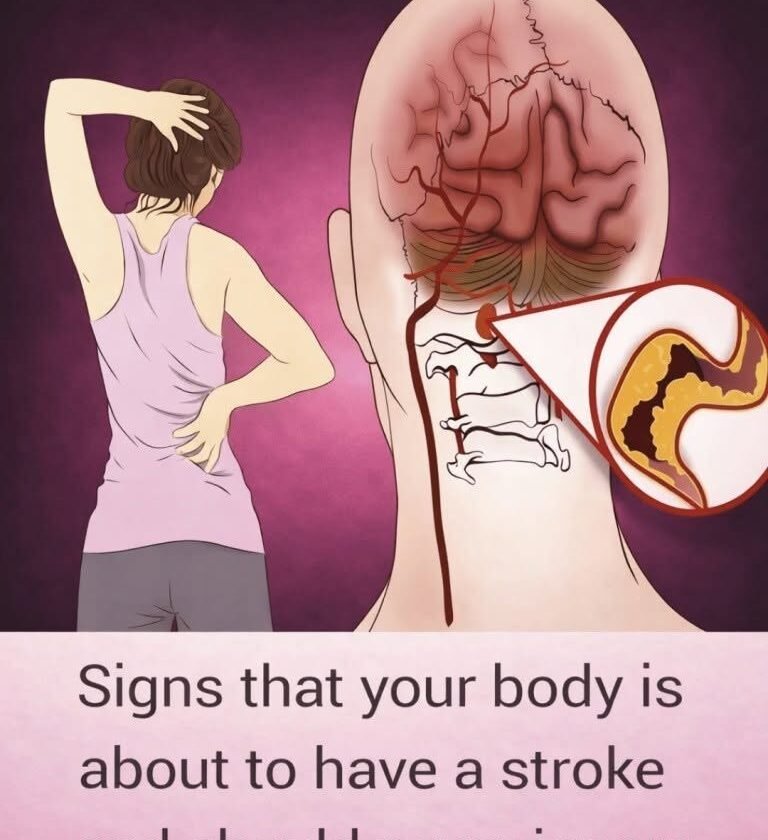
🚨 10 Early Warning Signs of a Stroke Everyone Should Know
A stroke usually starts suddenly rather than giving reliable warning signs days or weeks beforehand. Recognizing symptoms quickly can make a major difference because some treatments are time-sensitive.
Watch for sudden:
- Facial drooping or numbness — especially on one side.
- Weakness or numbness in an arm or leg — particularly on one side of the body.
- Slurred or difficult speech — words may become unclear or difficult to produce.
- Difficulty understanding speech — suddenly struggling to understand what others are saying.
- Vision changes — sudden blurred, double, or lost vision in one or both eyes.
- Severe dizziness or loss of balance — especially when it begins abruptly.
- Difficulty walking or coordinating movements — sudden unsteadiness can be a warning sign.
- Sudden, severe headache — particularly a headache that is unusual or comes on extremely rapidly.
- Sudden confusion — unexpected difficulty thinking, understanding, or responding appropriately.
- Sudden difficulty swallowing — particularly when accompanied by other neurological symptoms.
Remember BE FAST
- B — Balance: sudden loss of balance
- E — Eyes: sudden vision changes
- F — Face: facial drooping
- A — Arms: weakness or numbness
- S — Speech: speech difficulty
- T — Time: call emergency services immediately
🚑 Don’t wait
You do not need to have all 10 symptoms. One sudden neurological symptom can be enough to warrant emergency action.
If symptoms occur and then disappear, it could be a transient ischemic attack (TIA). That still requires urgent medical assessment because it can precede a major stroke.
Note the time the symptoms began, or the last time the person was known to be well, and tell emergency medical personnel.
Bottom line: Don’t wait for a stroke symptom to “get worse” before seeking help. Sudden neurological changes are an emergency.