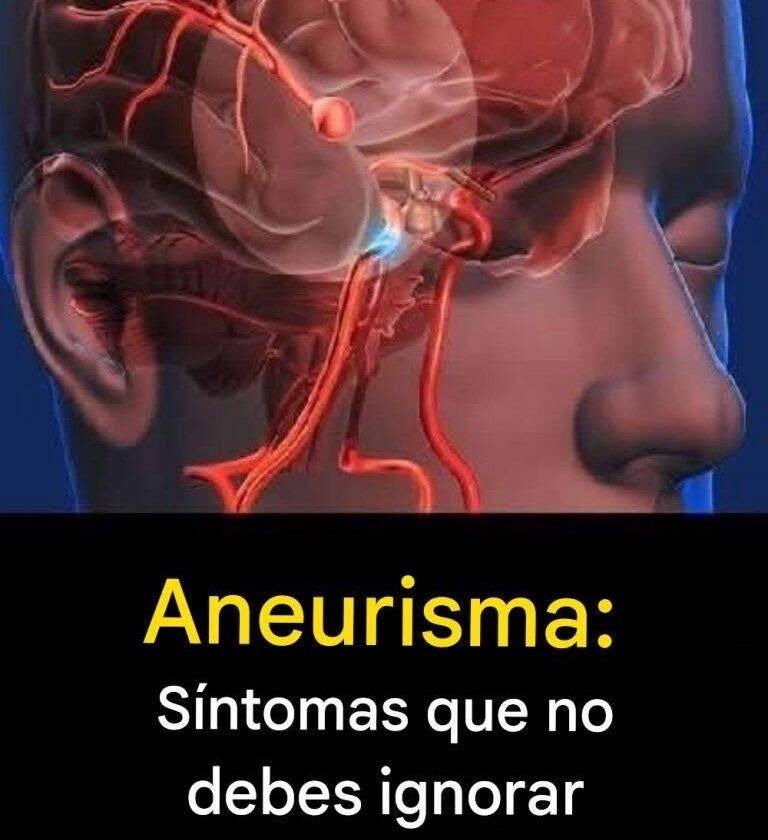
🩸 Aneurysm: Signs You Shouldn’t Ignore
An aneurysm is a weakened area in the wall of a blood vessel that bulges outward. Many aneurysms cause no symptoms until they rupture, which is why sudden, severe symptoms should never be dismissed.
🚨 Possible warning signs
The symptoms depend on where the aneurysm is located:
Sudden, extremely severe headache — especially a “worst headache of my life,” which can occur with a ruptured brain aneurysm.
Sudden weakness or numbness — particularly on one side of the body.
Difficulty speaking, seeing, or walking — neurological symptoms require emergency assessment.
Severe sudden pain in the chest, abdomen, or back — a ruptured aortic aneurysm can cause abrupt, intense pain.
Fainting, severe dizziness, or collapse — may indicate significant internal bleeding.
A pulsating feeling or lump in the abdomen — can occur with some abdominal aortic aneurysms.
Pain behind or around an eye, vision problems, or a drooping eyelid — can occur with certain brain aneurysms that press on nearby nerves.
Difficulty swallowing or hoarseness — occasionally caused by a large aneurysm pressing on surrounding structures.
⏱️ Don’t wait for symptoms to pass
If someone develops a sudden severe headache, sudden neurological changes, collapse, or severe unexplained chest/abdominal/back pain, call emergency medical services immediately. A ruptured aneurysm can cause life-threatening internal bleeding or brain injury.
Importantly, most headaches and back or abdominal pains are not caused by aneurysms. Symptoms alone cannot diagnose one; imaging and medical evaluation are needed.
If you want, I can also explain the early warning signs of brain aneurysm vs. aortic aneurysm separately.