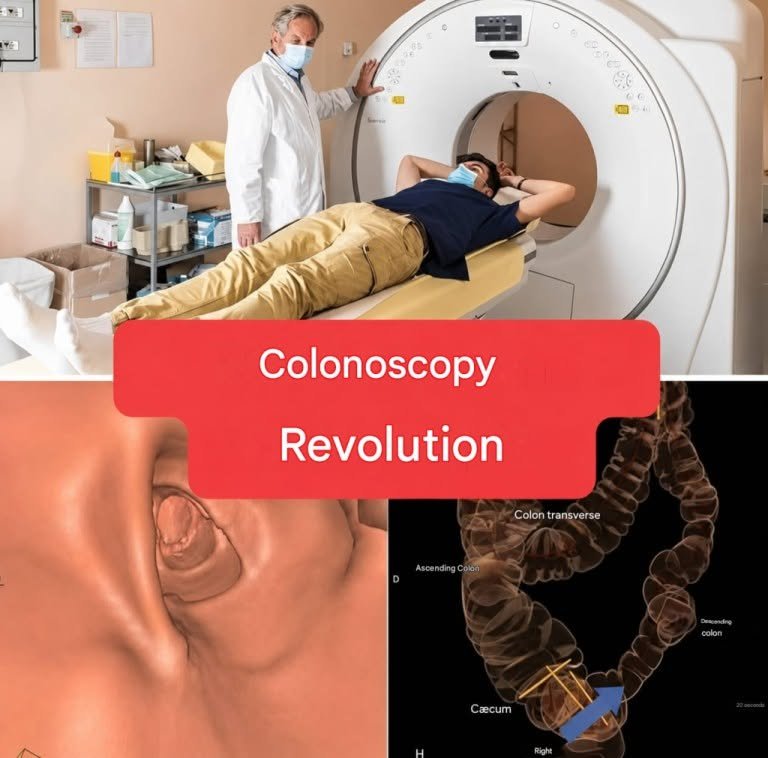
Is Colonoscopy Becoming Non-Invasive?
Partly—but the headline “colonoscopy will no longer be invasive” is misleading. There are already alternatives that don’t require inserting a traditional colonoscope, and newer technologies are being studied.
One option is capsule colonoscopy, where you swallow a small camera capsule that travels through the digestive tract and takes images. It avoids insertion of a conventional colonoscope, but you still generally need bowel preparation, and if a suspicious polyp is found, a conventional colonoscopy may still be necessary for biopsy or removal.
S
Springer
+1
Another option is CT colonography (“virtual colonoscopy”), which uses CT imaging rather than an endoscope. It’s less invasive, but it still requires bowel cleansing, and abnormalities generally require conventional colonoscopy for removal or biopsy.
C
Cancer.gov
+1
There is also exciting research into blood-based colorectal-cancer tests. A 2026 study reported a blood test that detected about 81% of advanced adenomas and 92% of stage I–III colorectal cancers, but it remains investigational and isn’t a replacement for colonoscopy yet.
R
Reuters
Bottom line
Traditional colonoscopy has not become obsolete. It remains particularly valuable because doctors can find and remove polyps and take biopsies during the same procedure. Current 2026 screening guidance still includes colonoscopy among the preferred screening options, while non-colonoscopy tests can provide alternatives for appropriate patients.
C
cancer.org
+1
So the more accurate version of the viral headline would be: “Newer non-invasive and minimally invasive tests may reduce the need for some traditional colonoscopies—but they don’t eliminate them yet.”
S
C
R
Sources