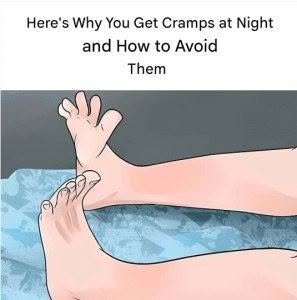
This Is Why You Get Painful Cramps at Night!
Have you ever been peacefully asleep when suddenly your calf or foot tightens into a painful knot?
Nighttime leg cramps are common, especially in the calves, and they can wake you up instantly.
But why do they happen?
🦵 1. Muscle fatigue or overuse
A long day on your feet, strenuous exercise, or suddenly increasing your activity can contribute to muscle cramps.
🛏️ 2. Your sleeping position
Keeping a muscle in a shortened position for a long time may contribute to nighttime cramping in some people.
💧 3. Dehydration or fluid imbalance
Not getting enough fluids—or losing substantial amounts through sweating, vomiting, or diarrhea—can contribute to muscle cramps.
But not every cramp means you’re dehydrated.
💊 4. Certain medications
Some medications can make cramps more likely.
If your cramps began after starting a new medication or changing a dose, talk with your doctor or pharmacist rather than stopping the medication yourself.
👵 5. Age and other health conditions
Nighttime cramps become more common with age and can sometimes be associated with nerve, circulation, kidney, or other medical conditions.
⚠️ What about magnesium?
You’ve probably heard that nighttime cramps automatically mean you need more magnesium.
Not necessarily.
Magnesium supplements don’t reliably prevent ordinary nighttime leg cramps for everyone. If you suspect a deficiency, discuss it with a healthcare professional rather than taking high-dose supplements on your own.
🧘 What can you do when a cramp strikes?
Try:
✔️ Gently stretching the affected muscle
✔️ Massaging the area
✔️ Slowly moving the limb
✔️ Standing and putting weight on the leg if you’re able to do so safely
For a calf cramp, gently pulling your toes toward your face can help stretch the muscle.
🚨 When should you get checked?
Talk with a healthcare professional if cramps are frequent, severe, getting worse, or repeatedly disturbing your sleep.
Also seek medical advice if cramps occur with significant swelling, weakness, numbness, skin changes, or other unusual symptoms.