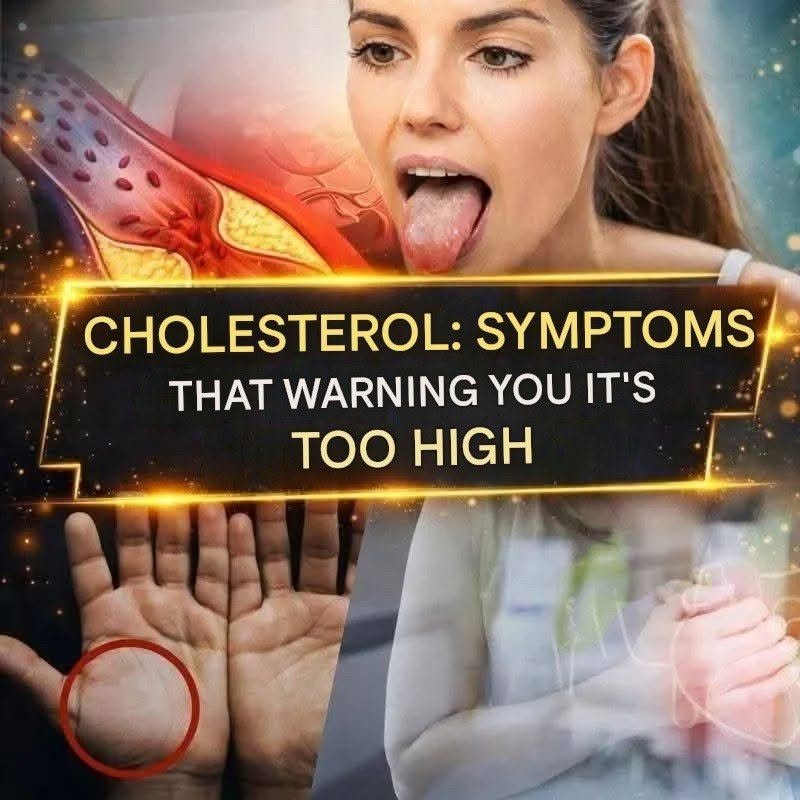
Cholesterol: 5 Warning Signs You Shouldn’t Ignore
Think you can tell when your cholesterol is high by how you feel?
Usually, you can’t.
High LDL (“bad”) cholesterol typically causes no symptoms. It can quietly contribute to plaque buildup in the arteries over time, which is why checking your cholesterol levels is so important.
However, certain physical changes can sometimes occur in people with very high or inherited cholesterol disorders.
1. 🟡 Yellowish bumps around the eyes
Small yellowish deposits around the eyelids, called xanthelasma, can sometimes be associated with abnormal cholesterol levels.
They can also occur for other reasons, so they don’t diagnose high cholesterol by themselves.
2. 👁️ A grayish-white ring around the cornea
A ring around the outer edge of the cornea, called corneal arcus, can occur with aging. When it appears unusually early in life, it may sometimes be associated with high cholesterol or an inherited lipid disorder.
3. 🦵 Cholesterol deposits in tendons
Firm, painless lumps around tendons—particularly the Achilles tendon—can occur in people with certain inherited forms of very high cholesterol.
4. 🫀 Chest discomfort during activity
This isn’t a symptom of high cholesterol itself.
Rather, long-term cholesterol-related plaque buildup can narrow the arteries supplying the heart, potentially causing angina—chest pressure or discomfort during exertion.
5. 🧠 Stroke-like symptoms
Again, these aren’t symptoms of cholesterol itself.
Plaque buildup in arteries can contribute to stroke risk. Sudden facial drooping, arm weakness, speech difficulty, vision loss, or loss of balance requires emergency medical attention.
🩸 The most important “warning sign” is actually your blood test
You can have very high cholesterol and feel completely normal.
That’s why cholesterol is often called a “silent” risk factor.
A healthcare professional can assess your LDL, HDL, triglycerides, overall cardiovascular risk, and whether treatment is appropriate.