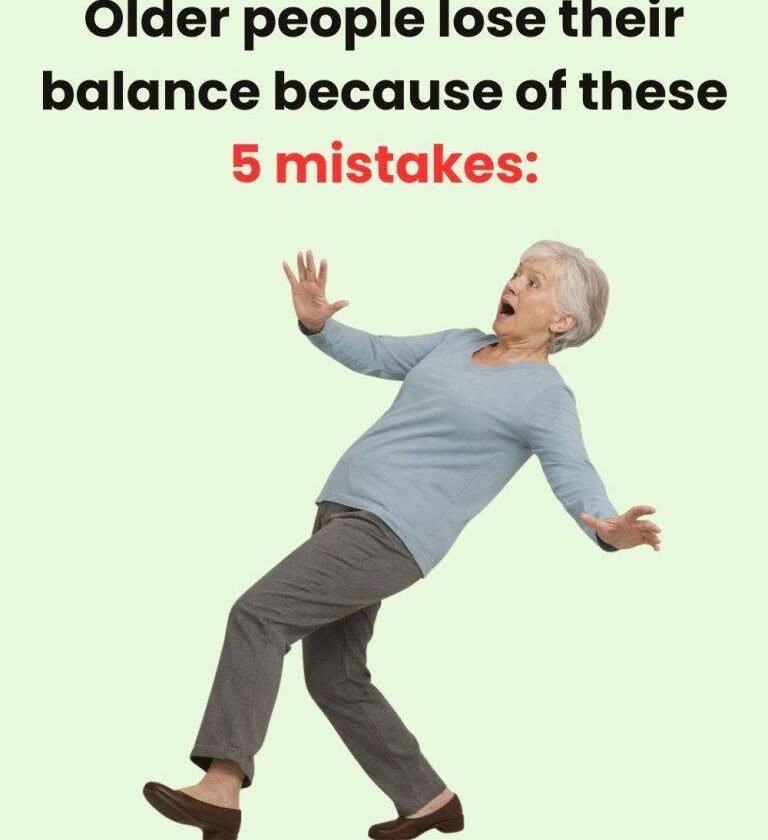
Balance naturally changes with age, but several common habits can make the problem worse. Here are some important ones:
1. Becoming too inactive
Avoiding walking or exercise because of fear of falling can actually reduce leg and core strength, making balance harder.
2. Ignoring vision changes
Poor vision can make it difficult to judge steps, obstacles, and changes in flooring. Regular eye examinations are important.
3. Wearing unsafe footwear
Loose slippers, high heels, worn-out soles, or shoes with poor support can increase the risk of slipping or tripping.
4. Taking medications without reviewing them
Some medications can cause dizziness, sleepiness, or a drop in blood pressure. Older adults should periodically ask a doctor or pharmacist to review their medications.
5. Standing up too quickly
Suddenly getting out of bed or a chair can cause a temporary blood-pressure drop and dizziness. Sitting briefly before standing can help.
6. Neglecting strength and balance exercises
Activities such as supervised strength training, walking, tai chi, or specific balance exercises can help maintain mobility and stability.
7. Keeping hazards around the home
Loose rugs, clutter, poor lighting, electrical cords, and objects on stairs are common trip hazards. Improving home safety can make a meaningful difference.
8. Assuming balance problems are “just aging”
New or worsening balance problems deserve attention. They can sometimes be related to vision problems, inner-ear disorders, neurological conditions, medication effects, or other medical issues.
Important: A sudden loss of balance, especially with weakness, numbness, difficulty speaking, severe headache, or vision changes, requires urgent medical evaluation because it can be a sign of a stroke.