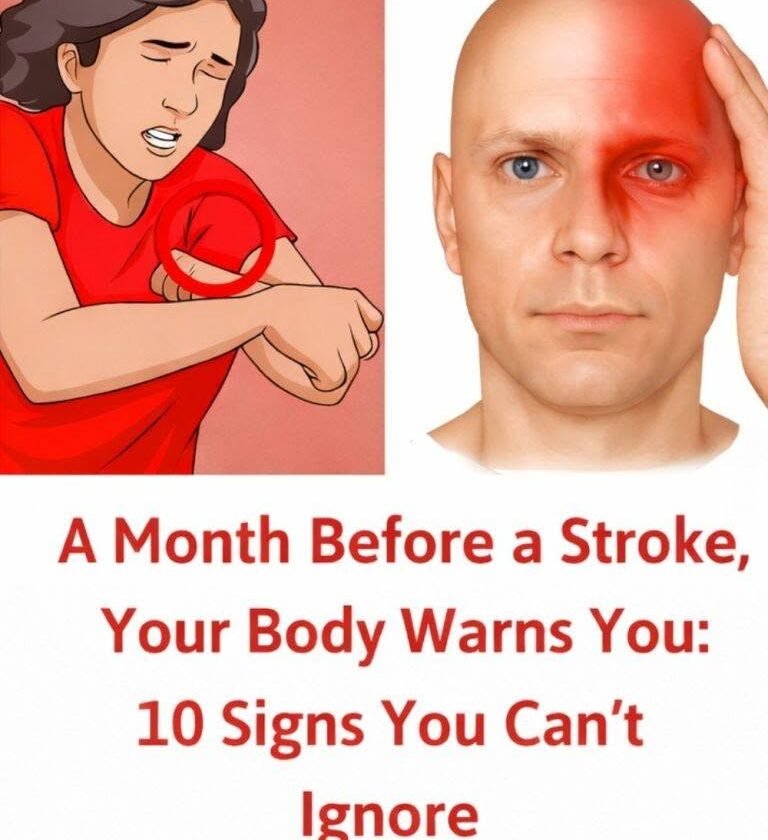
“A Month Before a Stroke, Your Body Warns You” — What You Should Know
The idea that everyone gets 10 specific warning signs exactly one month before a stroke is not supported by medical evidence. Stroke symptoms usually begin suddenly. However, a transient ischemic attack (TIA) can cause temporary stroke-like symptoms and is an important warning that a stroke may follow.
C
CDC
+1
10 symptoms that should never be ignored
Watch for sudden:
Numbness or weakness, particularly on one side of the face, arm, or leg.
Facial drooping or an uneven smile.
Difficulty speaking or suddenly slurred speech.
Difficulty understanding what other people are saying.
Sudden vision changes, including loss of vision or double vision.
Sudden dizziness or loss of balance.
Sudden difficulty walking or coordinating movements.
Sudden confusion.
A sudden, severe headache with no known cause.
Symptoms that disappear after a few minutes. These can be a TIA and still require urgent assessment.
C
CDC
+1
🚨 The most important message
Don’t wait to see whether symptoms get worse. Use B.E. F.A.S.T.:
B — Balance trouble
E — Eye/vision changes
F — Face drooping
A — Arm weakness
S — Speech difficulty
T — Time to call emergency services
If any of these occur right now, call your local emergency service immediately. Even if the symptoms disappear, a possible TIA requires urgent medical evaluation.
C
CDC
+1
Reducing your risk
The most important preventive measures include controlling high blood pressure, managing diabetes and cholesterol, not smoking, staying physically active, maintaining a healthy weight, eating a heart-healthy diet, limiting alcohol, and taking prescribed medications as directed.
W
www.stroke.org
+1
Bottom line: There is no dependable “one month before” checklist. The warning sign that matters most is any sudden neurological change—even if it goes away.
C
W
Sources