“An Early Sign of Alzheimer’s Can Be Noticed While Taking a Shower”: What Does It Mean?
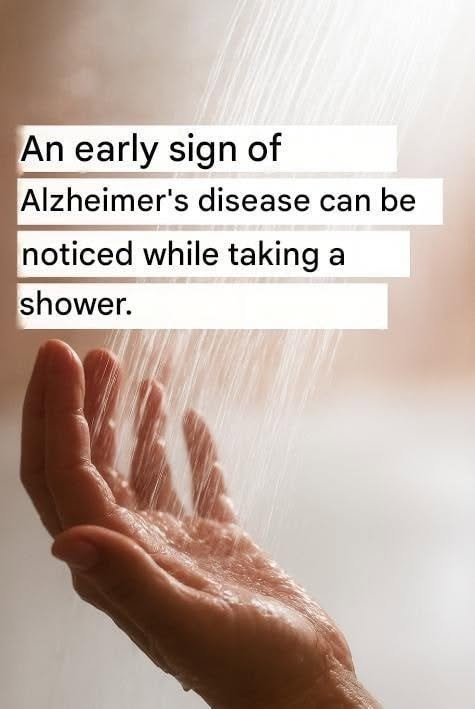
Catchy headlines or social media posts suggesting that a specific clue in the shower can reveal early Alzheimer’s disease often sound mysterious or alarming. While a shower isn’t a diagnostic test, neurologists and geriatric specialists do note that changes in how a person handles daily hygiene routines can be among the earliest, most subtle indicators of cognitive decline.
Because personal hygiene involves a complex multi-step sequence of executive functions, memory, and physical coordination, a breakdown in this routine can signal that the brain is struggling.
Here is what experts mean when they look at bathroom and showering habits in relation to cognitive health:
1. Difficulty with Sequencing and Execution (Executive Dysfunction)
-
The Sign: Taking a shower is actually a complex sequence of tasks: adjusting the water temperature to a safe level, gathering a towel, undressing, stepping in safely, washing body parts in a logical order, rinsing, and drying off.
-
The Connection: Early-stage Alzheimer’s affects the brain’s frontal lobe and executive functioning—the ability to plan, sequence, and execute multi-step tasks. A person might suddenly find themselves confused about the order of operations, such as trying to wash with a dry bar of soap before turning the water on, or forgetting whether they have already washed their hair.
2. Changes in Personal Hygiene Habits (Self-Neglect)
-
The Sign: A noticeable, uncharacteristic shift in personal grooming, such as wearing the same clothes for days, refusing to shower, or stating “I already took a shower” when they haven’t in a week.
-
The Connection: As memory and cognitive processing fade, individuals may simply lose track of time and the passage of days. Furthermore, tasks that once felt automatic can start to feel overwhelming, leading to avoidance or a lack of awareness regarding personal body odor or cleanliness.
3. Sensory Confusion with Water Temperature
-
The Sign: Suddenly struggling to adjust the water temperature correctly, or failing to realize that the water is scalding hot or freezing cold.
-
The Connection: Cognitive decline can impair spatial awareness, sensory interpretation, and sensory processing, making it difficult for the brain to accurately interpret tactile feedback from the water knobs or temperature changes.
4. Increased Anxiety or Fear of the Bathroom
-
The Sign: Showing sudden hesitation, fear, or agitation when it is time to bathe.
-
The Connection: Slippery surfaces, echoing acoustics, and the feeling of water overhead can become disorienting and overwhelming for a brain experiencing cognitive decline. This can manifest as uncharacteristic resistance or fear toward an activity that used to be routine and relaxing.
A Crucial Distinction: Normal Aging vs. Cognitive Decline
It is entirely normal to occasionally skip a shower when you are exhausted, or to have a lazy weekend routine. However, doctors look for persistent, unexplained changes that represent a clear departure from a person’s lifelong habits, especially when accompanied by other signs like short-term memory loss, misplacing items in bizarre locations, or getting lost in familiar places.
Medical Note: Hygiene changes alone do not automatically point to Alzheimer’s disease—they can also be caused by severe depression, physical mobility issues, chronic pain, or sensory losses like failing eyesight. If you notice a loved one struggling significantly with daily self-care tasks, it is important to consult a physician for a comprehensive cognitive and physical evaluation.
Have you ever noticed how changes in everyday habits can sometimes serve as an early window into someone’s overall health and well-being?