What does the “5 diseases” claim really mean?
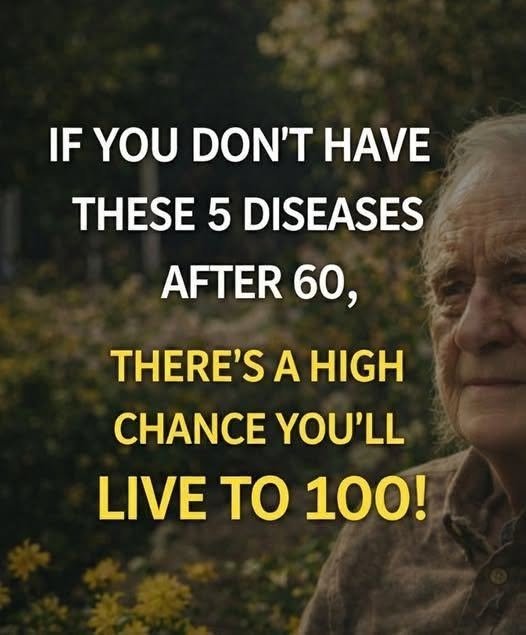
The headline “If You Reach 60 Without These 5 Diseases, You Have a High Probability of Living to 100” is based on a real idea in longevity research, but the wording “high probability” is misleading.
Research consistently finds that people who reach older ages without major chronic diseases tend to live longer and have a greater chance of reaching very old age. However, there is no scientifically established list of five diseases that, if you avoid them at 60, guarantees—or even by itself establishes—a high probability of reaching 100.
The five conditions commonly discussed
Depending on the article or video making this claim, the list usually centers on major age-related diseases such as:
-
Heart disease / cardiovascular disease
-
Includes coronary artery disease, heart attack and other cardiovascular conditions.
-
Cardiovascular health is strongly associated with longer disease-free life expectancy.
-
-
Stroke
-
Stroke is one of the major diseases whose occurrence becomes more common with age.
-
Studies of centenarians show that those who eventually reach 100 tend to have lower rates of stroke at comparable ages.
-
-
Cancer
-
Avoiding cancer until older age is associated with exceptional longevity, although cancer can still occur in people who live to 100.
-
In a large Swedish study, people who reached 100 had lower cumulative cancer incidence than people who died at younger ages.
-
-
Type 2 diabetes
-
Diabetes is associated with cardiovascular complications and other chronic problems.
-
A large prospective study found that healthy lifestyle factors were associated with substantially more years of life free from diabetes, cardiovascular disease and cancer.
-
-
Dementia / major cognitive disease
-
Cognitive health is particularly important for maintaining independence in very old age.
-
Studies of people who reach 100 show that some remain cognitively healthy, although many centenarians do develop cognitive impairment.
-
Important: these five should not be interpreted as an official medical “longevity checklist.” Different studies examine different combinations of diseases. For example, one major centenarian study examined hypertension, heart disease, lung disease, stroke, cancer and diabetes—not exactly the five above.
What happens if you’re 60 and don’t have these diseases?
That’s genuinely encouraging.
A 2024 study following 170,787 people aged 60 and older in Stockholm found that people who eventually became centenarians generally had lower rates of major diseases throughout later life. They tended to delay or avoid diseases such as stroke, heart attack and several cancers rather than simply surviving those diseases for longer.
Another large UK study looked at 135,199 adults and four major diseases: cardiovascular disease, diabetes, cancer and dementia. People with better cardiovascular health had substantially more years of life without these diseases. At age 50, for example, high cardiovascular health was associated with an estimated 28.4 disease-free years in men and 33.6 years in women, compared with 21.5 and 24.2 years, respectively, among people with low cardiovascular health.
But notice the difference:
“Higher chance of living longer and healthier” ≠ “high probability of reaching 100.”
Reaching 100 is still relatively uncommon and depends on many factors, including genetics, smoking, blood pressure, cholesterol, physical activity, body weight, diet, socioeconomic circumstances, medical care and chance.
An interesting finding about centenarians
You might think that everyone who reaches 100 must have been completely disease-free.
That’s not true.
In a US study, researchers followed older adults and compared people who eventually reached 100 with those who died earlier. About 23% of centenarians reached 100 without a major chronic disease, meaning the majority had at least one major chronic disease.
Other research shows that centenarians can have several medical conditions. A German study of people around age 100 found an average of about five illnesses per person.
So having a disease at 60 does not mean you cannot live to 100, and being disease-free at 60 does not guarantee it.
What matters more than simply counting diseases?
Think of longevity as a combination of risk factors, rather than a five-item checklist.
The American Heart Association’s “Life’s Essential 8” framework, for example, considers:
-
Blood pressure
-
Cholesterol
-
Blood glucose
-
Body weight
-
Physical activity
-
Diet
-
Tobacco/nicotine exposure
-
Sleep
Higher overall cardiovascular health was associated with longer life expectancy and more years free from cardiovascular disease, diabetes, cancer and dementia