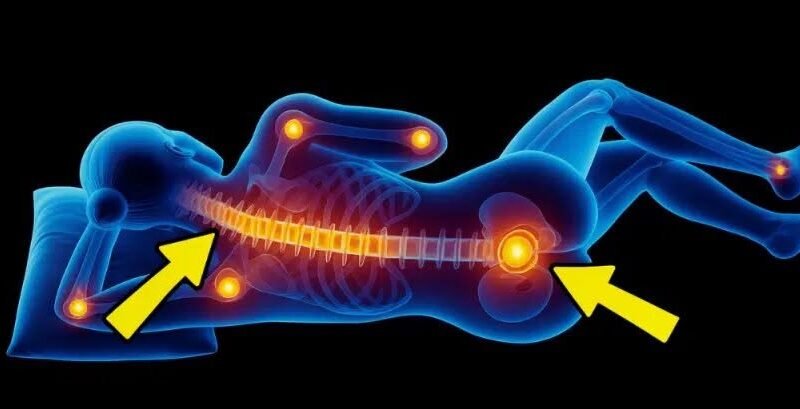
The “Deadly Sleeping Mistake” That Can Raise Heart Attack and Stroke Risk Overnight
There isn’t one sleeping position or bedtime mistake that suddenly causes a heart attack or stroke in an otherwise healthy person. However, one nighttime problem deserves special attention: untreated sleep apnea.
Sleep apnea causes repeated interruptions in breathing during sleep. These episodes can lower blood oxygen and repeatedly activate the body’s stress response. Over time, untreated sleep apnea is associated with high blood pressure, heart disease, heart attack, atrial fibrillation, and stroke.
7 warning signs you shouldn’t ignore
1. Loud, persistent snoring
Especially when it’s accompanied by pauses in breathing.
2. Gasping or choking during sleep
A partner may notice that you suddenly gasp, snort, or appear to struggle for air.
3. Someone notices that you stop breathing
Repeated pauses in breathing are one of the classic signs of obstructive sleep apnea.
4. Waking with headaches
Morning headaches can occur when sleep is repeatedly disrupted and oxygen levels fluctuate.
5. Excessive daytime sleepiness
Feeling exhausted despite spending enough time in bed can be a sign of poor-quality sleep.
6. Difficult-to-control blood pressure
Sleep apnea is associated with hypertension, including blood pressure that remains difficult to control.
7. Repeated nighttime awakenings
Frequent disruption of sleep can be part of sleep apnea and other sleep disorders.
Another mistake: consistently getting too little sleep
Sleep itself is important for cardiovascular health. Regularly getting insufficient or poor-quality sleep is associated with increased risk of high blood pressure, heart disease, and stroke.
The American Heart Association also emphasizes that sleep duration, regularity, continuity, and sleep disorders all matter for cardiovascular health.
What you should do
If you regularly snore loudly, gasp during sleep, stop breathing according to a bed partner, or remain unusually tired during the day, talk with a healthcare professional about sleep apnea testing. Diagnosis can involve a home sleep apnea test or an overnight sleep study.
And if you wake during the night with chest pressure or pain, severe shortness of breath, fainting, sudden weakness/numbness, facial drooping, or difficulty speaking, don’t assume it’s just a sleep problem—seek emergency medical care.
The real takeaway: Don’t be frightened by your sleeping position. The bigger concern is repeatedly disrupted breathing or chronically poor sleep, both of which are treatable and worth addressing.