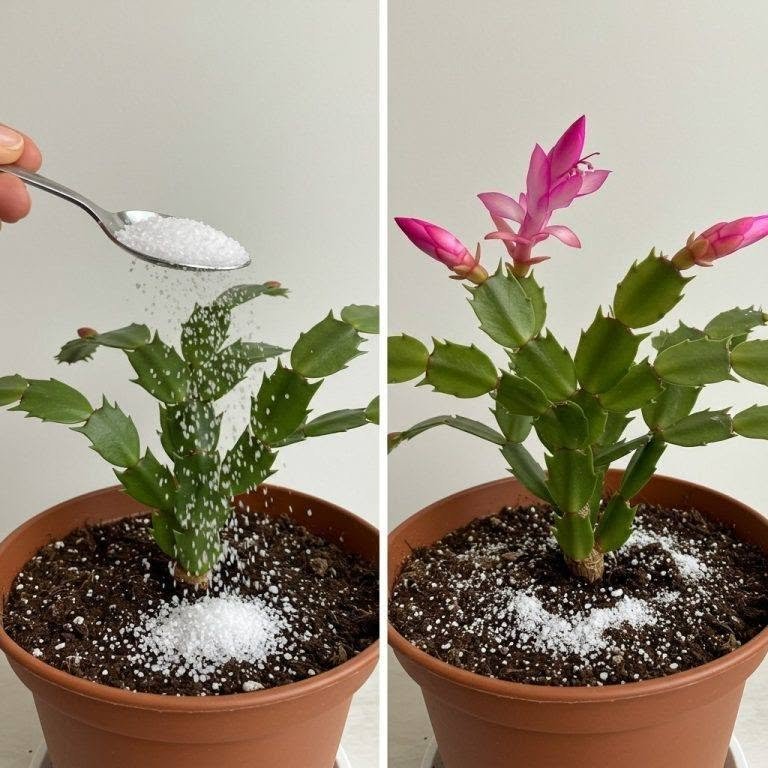
Fall Awakening: Breathing Life into House Flowers with a Little Secret
As summer fades into autumn, house flowers often seem to lose some of their energy. Leaves may become dull, blooms may slow down, and the soil can stay moist longer as temperatures and sunlight change. But fall doesn’t have to mean the end of a plant’s beauty. With a few thoughtful adjustments—and one simple little secret—you can help your indoor flowers look fresh and healthy throughout the season.
🍂 The Fall Transition
During summer, plants usually receive stronger sunlight and may need frequent watering. In autumn, daylight becomes shorter and indoor temperatures can fluctuate. Because plants generally grow more slowly, their water requirements often decrease too.
The first step is to move your plants toward brighter natural light. A sunny windowsill can make a significant difference, especially for flowering plants. However, avoid placing delicate plants directly against a cold window if nighttime temperatures drop significantly.
💧 The Little Secret: Don’t Overwater
One of the easiest ways to help house flowers through fall is surprisingly simple: water less often, but more thoughtfully.
Instead of watering according to a fixed schedule, check the soil first. Push your finger about an inch into the surface. If it feels dry, the plant may need water. If it is still damp, wait a little longer.
This small habit can prevent one of the most common indoor-plant problems in autumn—root damage caused by consistently wet soil.
🌿 Give the Roots Some Air
Good drainage becomes especially important when growth slows. Make sure your pots have drainage holes and that excess water isn’t sitting in a saucer for long periods.
If the soil has become hard and compacted, gently loosen the surface with a small tool or your fingers without disturbing the roots. This allows air and water to move through the soil more effectively.
☀️ Find the Right Light
Autumn’s softer sunlight can be beautiful, but plants may receive considerably less light than they did during summer.
Rotate your pots every week or two so that all sides receive reasonably even exposure. If a plant begins stretching toward the window or producing smaller leaves, it may be asking for more light.
For plants that require particularly bright conditions, a suitable grow light can provide additional support during darker days.
✂️ A Gentle Fall Refresh
Remove yellowing, dead, or damaged leaves with clean scissors. Spent flowers can also be removed to keep the plant looking tidy and redirect its energy toward healthy growth.
Avoid heavy pruning unless the particular plant benefits from it. Autumn is generally a time to prepare plants for a slower season, rather than forcing vigorous new growth.
🌱 What About Fertilizer?
The temptation is to feed a struggling plant heavily, but more fertilizer isn’t necessarily the answer. As many houseplants naturally slow down in fall and winter, they often need less nutrition.
If the plant is actively growing or flowering, a balanced houseplant fertilizer may be appropriate according to its specific needs. Otherwise, reducing or pausing feeding can be better than overfertilizing.
🕯️ Create a Comfortable Indoor Environment
House flowers generally appreciate stable conditions. Keep them away from heating vents, radiators, fireplaces, and cold drafts. Sudden temperature changes can stress plants even when the room itself feels comfortable to you.
Moderate humidity can also benefit many tropical houseplants. If your home becomes particularly dry, grouping plants together or using another safe method of increasing humidity can help.