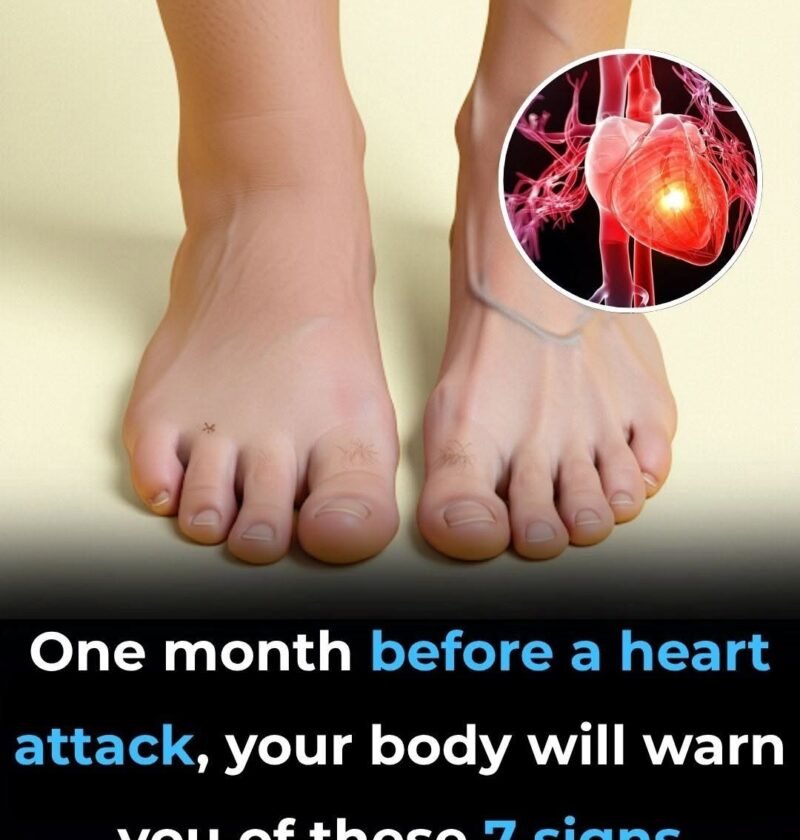
Your Body May Show These 7 Warning Signs Before a Heart Attack
A heart attack does not always happen without warning. Some people experience symptoms hours, days, or even weeks beforehand, although others have no warning symptoms at all. Persistent or recurring symptoms should never be ignored.
1. Unusual or persistent fatigue
Feeling unusually exhausted—especially when ordinary activities suddenly seem harder—can sometimes occur before a heart attack. This symptom can be particularly subtle in women.
2. Shortness of breath
Becoming unexpectedly breathless during activities that previously felt easy can be a warning sign of reduced blood flow to the heart. Shortness of breath can also occur with a heart attack even without obvious chest pain.
3. Recurrent chest pressure or discomfort
Pressure, squeezing, tightness, aching, or discomfort in the chest that keeps returning, particularly with physical activity, can indicate angina and may signal an increased risk of a heart attack.
4. Pain or discomfort in the upper body
Heart-related discomfort can spread beyond the chest to the arm, shoulder, back, neck, jaw, or upper abdomen. It doesn’t have to be severe to be important.
5. Nausea or indigestion
Nausea, vomiting, heartburn, or indigestion can sometimes accompany heart problems. These symptoms may be particularly easy to dismiss because they have many non-cardiac causes.
6. Unexplained sweating
A sudden cold sweat, especially when accompanied by chest discomfort, nausea, dizziness, or shortness of breath, can be a warning sign of a serious heart problem.
7. Dizziness or unusual weakness
Lightheadedness, dizziness, weakness, or feeling as though you might faint can occur when the heart isn’t receiving or pumping enough blood. These symptoms can have many other causes, but sudden or unexplained symptoms warrant attention.
Don’t wait for the “classic” heart attack
Women, older adults, and people with diabetes are more likely to have less typical symptoms or little/no chest pain.
If you currently have chest pressure or pain, shortness of breath, cold sweating, nausea, fainting, or pain spreading to your arm, back, neck, or jaw, treat it as an emergency and contact your local emergency medical service immediately. Don’t wait for symptoms to become severe.
Important: These symptoms do not prove that a heart attack is coming. They can have many other causes. The key warning sign is a new, unexplained, persistent, or worsening change from your normal health.