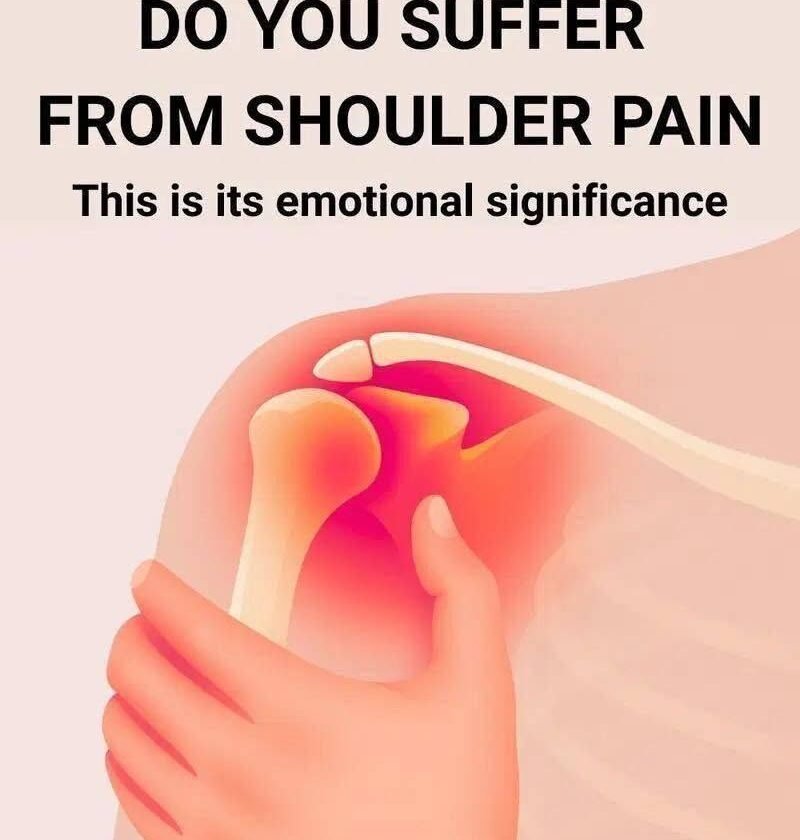
Does Your Shoulder Hurt? Here’s What It May Mean Emotionally
You may have heard that shoulder pain means you’re carrying too much emotional responsibility, stress, or “a heavy burden.” While that can be a meaningful way to describe how you feel, there is no scientific evidence that a specific shoulder location corresponds to a particular emotion.
What is true is that emotional stress can affect the body. Stress can cause muscle tension and pain, including tension around the neck and shoulders.
What your shoulder pain may be telling you
1. You may be under prolonged stress
When you’re stressed, muscles can remain tense for extended periods. This can contribute to neck and shoulder discomfort.
2. You may not be sleeping well
Poor sleep can increase how strongly you experience pain, while ongoing pain can make sleep more difficult.
3. You may be spending too much time in one position
Long periods at a computer, using a phone, or sitting with your shoulders rounded can contribute to muscle tension and shoulder pain.
4. You may be dealing with an actual physical shoulder problem
Stress isn’t the only explanation. Tendon problems, bursitis, arthritis, frozen shoulder, injuries, and problems originating in the neck can all cause shoulder pain.
Don’t assume it’s “just emotional”
If shoulder pain is persistent, worsening, or limiting your movement, it’s worth getting it assessed rather than attributing it to emotions. Seek urgent medical attention for sudden severe pain, inability to move the arm, significant injury, numbness or loss of sensation, or shoulder pain accompanied by chest pain or shortness of breath.
So, emotionally, your shoulder pain might coincide with stress or feeling overwhelmed—but the pain itself isn’t a reliable emotional diagnosis.