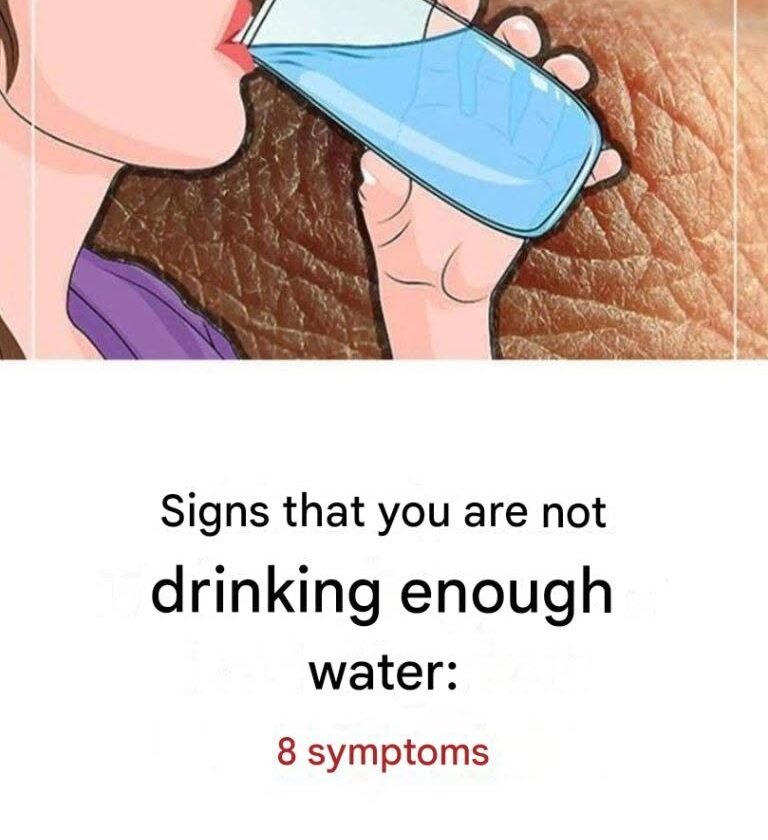
💧 What Happens to Your Body If You Don’t Drink Enough Water?
Your body depends on adequate fluids to regulate temperature, remove waste, support digestion, and keep many systems functioning normally. When you lose more fluid than you replace, dehydration develops. (CDC)
Early signs of dehydration
You may notice:
- 🥤 Increased thirst
- 🚽 Darker, stronger-smelling urine
- Urinating less often
- 🤕 Headache or dizziness
- 😴 Tiredness and weakness
- 👄 Dry mouth, lips or tongue
- Difficulty concentrating or unclear thinking
- Constipation (nhs.uk)
If dehydration becomes severe
Severe dehydration can cause rapid heartbeat, low blood pressure, confusion, very little or no urination, and loss of consciousness. It can become a medical emergency. (nhs.uk)
Older adults are particularly vulnerable because thirst may become less noticeable with age. (MedlinePlus)
💦 How much should you drink?
There isn’t one exact amount that everyone needs. Fluid requirements vary with body size, activity, temperature, illness, diet and medications. A practical guide is to drink regularly throughout the day and aim for pale-yellow urine. The NHS gives 6–8 cups or glasses of fluid per day as a general guide, with higher needs during heat, exercise, vomiting or diarrhea. (nhs.uk)
Important: People with certain heart, kidney, or liver conditions may be specifically told to restrict fluids, so they shouldn’t deliberately increase water intake without medical advice.
Bottom line: Don’t wait until you’re extremely thirsty. Regular fluids throughout the day are generally better than trying to drink a large amount all at once.