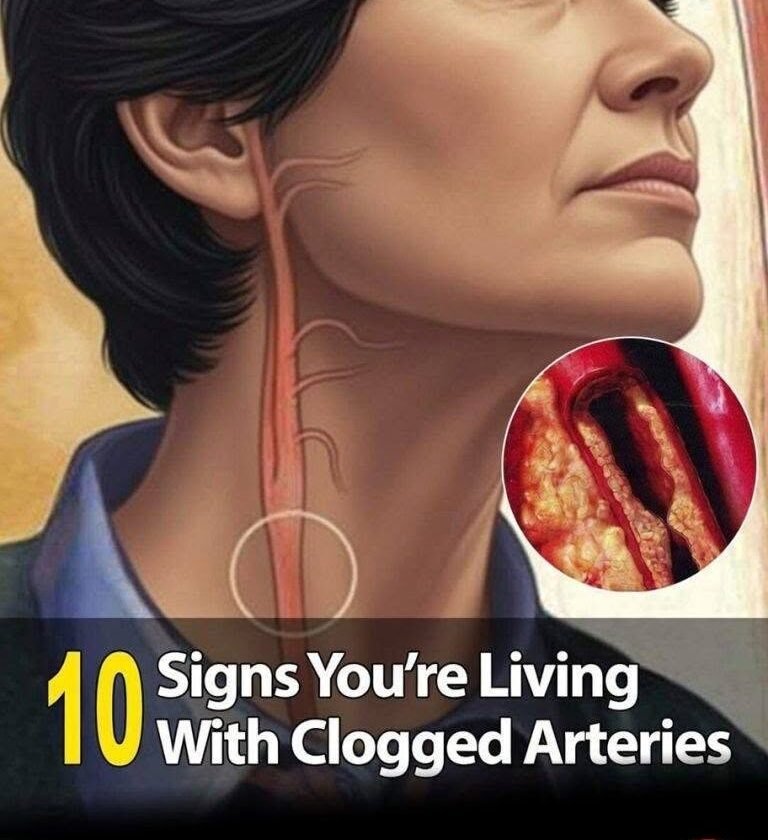
If you’re checking the headline “10 Indicators of Blocked Arteries You Shouldn’t Ignore,” the important point is that blocked arteries often cause no symptoms until disease is advanced. Symptoms also depend on which arteries are affected.
10 possible warning signs
- Chest pressure, squeezing, or discomfort, especially during activity.
- Shortness of breath, particularly with exertion.
- Pain spreading to the arm, shoulder, neck, jaw, or back.
- Unusual fatigue or weakness, especially when it is new or unexplained.
- Dizziness or lightheadedness.
- Nausea, indigestion, or unusual sweating accompanying chest or exertional symptoms.
- Leg pain, cramping, heaviness, or weakness when walking that improves after resting—a classic symptom of peripheral artery disease (PAD).
- Coldness, discoloration, numbness, or tingling in a foot or leg, particularly if one side is affected.
- Sores on the feet or legs that heal unusually slowly.
- Sudden neurological symptoms such as facial drooping, one-sided weakness, trouble speaking, vision changes, or loss of balance can indicate that blood flow to the brain has been interrupted.
🚨 Don’t wait with emergency symptoms
Chest discomfort that doesn’t go away, severe shortness of breath, or sudden stroke symptoms require emergency medical attention. Heart attacks can sometimes produce mild or unusual symptoms—or even no obvious symptoms—particularly in older adults and people with diabetes.
Also, these symptoms do not prove that an artery is blocked. Other heart, lung, nerve, muscle, and digestive conditions can cause similar symptoms. A clinician may use blood tests, an ECG, imaging, or other vascular tests depending on the symptoms and risk factors.