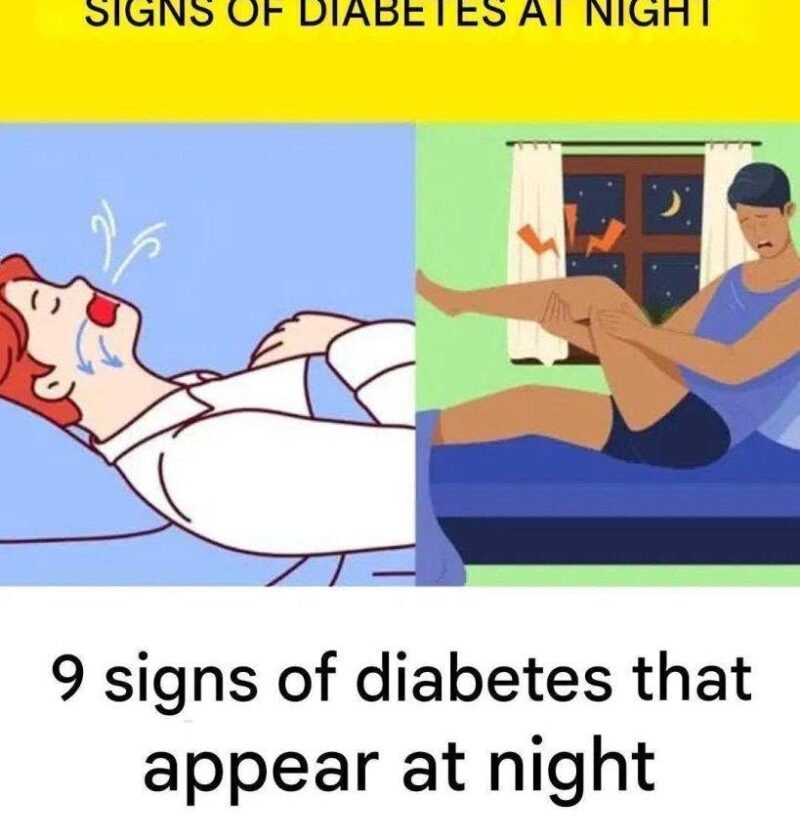
9 Signs of Diabetes That May Appear at Night
The headline is partly misleading. Diabetes doesn’t have a special set of symptoms that only occur at night, and many people with type 2 diabetes have few or no symptoms. However, some diabetes-related symptoms can become particularly noticeable during the night. (NIDDK)
🌙 Possible nighttime clues
- Waking repeatedly to urinate — high blood glucose can cause increased urination, including at night. (NIDDK)
- Extreme thirst or a dry mouth — increased urination can lead to fluid loss and thirst.
- Night sweats — particularly in someone taking insulin or certain diabetes medicines, this can indicate low blood sugar (hypoglycemia). (NIDDK)
- Nightmares or restless sleep — nighttime hypoglycemia can disturb sleep and cause nightmares. (NIDDK)
- Waking tired, confused, irritable, or with a headache — these can also occur after nighttime low blood sugar. (NIDDK)
- Tingling, burning, or pain in the feet — diabetic nerve damage can cause symptoms that are particularly troublesome at night. (CDC)
- Blurred vision — changes in blood glucose can affect vision.
- Unexplained weight loss or persistent fatigue — these are recognized diabetes symptoms but aren’t specific to nighttime. (NIDDK)
- Slow-healing cuts or recurrent infections — these can be clues to diabetes, although they aren’t specifically nighttime symptoms. (CDC Stacks)
🩸 The important distinction
Nighttime urination doesn’t automatically mean diabetes. It can also result from drinking a lot in the evening, medications, prostate problems, bladder conditions, sleep apnea, or other medical conditions.
If you repeatedly experience several of these symptoms, the useful next step isn’t a “nighttime diabetes remedy”—it’s a blood glucose test such as an A1C or fasting glucose test.
If you’re already taking insulin or another medicine that can cause low blood sugar and you wake sweating, shaky, confused, or with a racing heartbeat, check your glucose if possible. Blood glucose below 70 mg/dL (3.9 mmol/L) is generally considered low. (NIDDK)
Bottom line: Waking frequently to urinate, excessive thirst, unexplained fatigue, and nighttime nerve symptoms can be clues, but none proves diabetes. A blood test is the way to find out.