Common Emotional & Symbolic Meanings
-
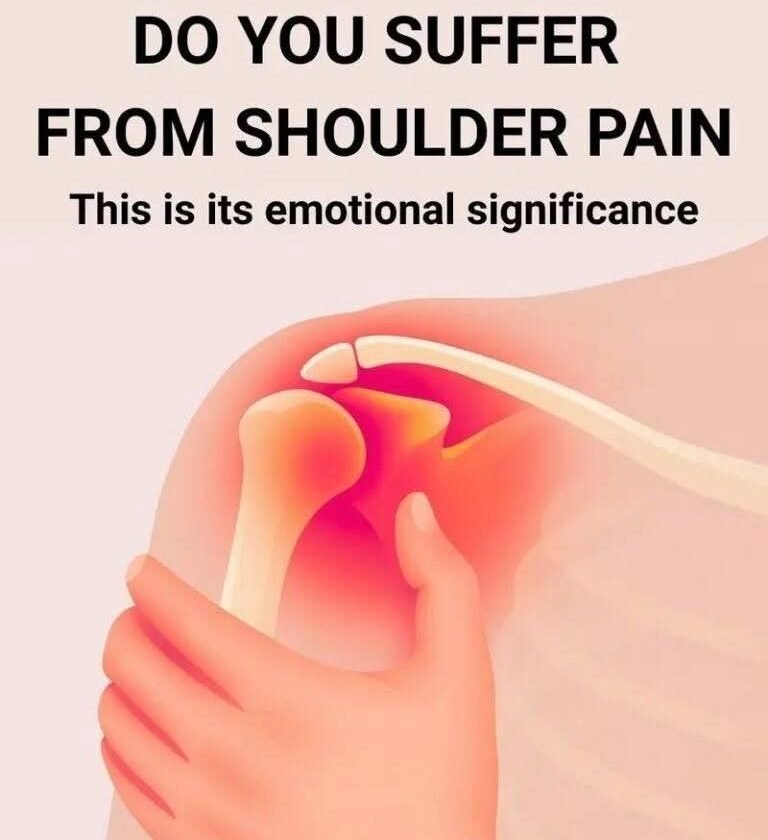
Carrying heavy responsibilities: Feeling like the weight of family, work, finances, or other people’s problems rests solely on your shoulders.
-
Suppressed stress or hypervigilance: When you feel anxious, defensive, or constantly “on guard,” your shoulders instinctively elevate and tighten as part of the body’s fight-or-flight response.
-
Difficulty letting go or asking for help: Holding onto control, perfectionism, or pride rather than sharing the load or setting boundaries.
-
Unexpressed grief, guilt, or resentment: Emotional strain that isn’t voiced or processed often shows up as chronic upper-body tightness.
Left vs. Right Shoulder Interpretations
-
Right shoulder: Often associated with work, external action, providing, career pressure, or feeling forced to push forward.
-
Left shoulder: Often linked to emotional nurturing, family duties, relationships, or personal vulnerability.
Practical Ways to Release Both Physical and Emotional Tension
-
Check in with your workload and boundaries: Ask yourself what tasks, worries, or expectations you are carrying right now that you can delegate, pause, or let go of.
-
Practice physical release: Slow shoulder rolls, gentle neck stretches, heat therapy, or progressive muscle relaxation (tensing your shoulders up toward your ears for 5 seconds, then letting them drop completely) signal your nervous system to stand down.
-
Rule out physical causes: Posture, desk ergonomics, sleeping position, rotator cuff strain, or pinched nerves are the most direct causes of shoulder pain—see a doctor or physical therapist if pain is sharp, persistent, or limits movement.