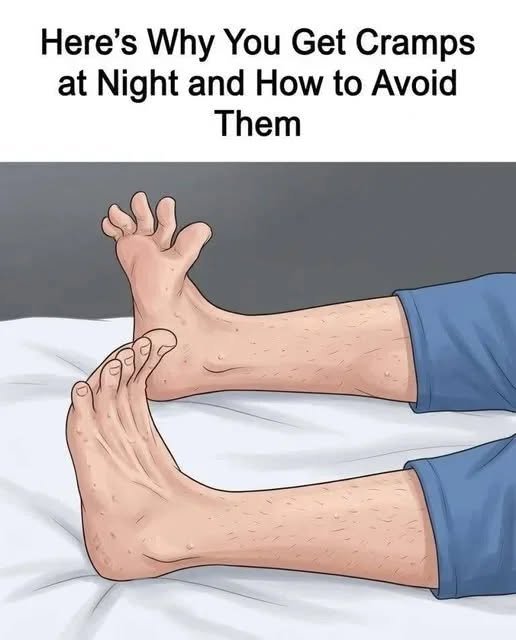
7 Common Causes of Nighttime Leg Cramps
-
Muscle fatigue or overuse: Heavy workouts, long walks, or standing for hours on hard floors can leave leg muscles prone to sudden spasms at rest.
-
Prolonged sitting or inactivity: Sitting all day without stretching shortens calf and hamstring tendons, increasing cramp risk overnight.
-
Dehydration and electrolyte shifts: Low fluid intake or heavy sweating can alter water and mineral balance around muscle fibers.
-
Foot position during sleep: Pointing your toes downward or sleeping under heavy, tightly tucked sheets keeps calf muscles in a shortened position.
-
Pregnancy: Extra body weight, altered circulation, and shifting mineral needs make nighttime cramps common, especially later in pregnancy.
-
Medications: Certain drugs list muscle cramps as a side effect, including diuretics, statins, some blood pressure drugs, and asthma inhalers.
-
Underlying nerve or circulation conditions: Peripheral artery disease, , thyroid disorders, or lower-back nerve compression can contribute to recurrent cramps.
How to Stop a Cramp Naturally in the Moment
-
Stretch the muscle right away: Straighten the leg and pull your toes and foot upward toward your shin (for a calf cramp), or stand up and press your weight gently onto the affected foot.
-
Massage the tight knot: Rub the cramped muscle firmly with your hands or fingers to ease tension and boost local blood flow.
-
Apply warmth: Hold a warm towel, hot water bottle, or heating pad against the muscle to help it relax.
-
Take a few slow steps: Once the sharpest pain passes, walking gently around the room helps reset normal muscle tone.
Daily Habits to Prevent Future Cramps
-
Stretch before bed: Spend 1 to 2 minutes doing gentle calf and hamstring stretches before getting into bed.
-
Sip fluids through the day: Stay steadily hydrated earlier in the day rather than drinking a large amount right before sleep.
-
Keep feet neutral in bed: Leave blankets untucked at the foot of the bed so your toes are not forced downward.
-
Wear supportive shoes: Cushioned footwear during daytime activity reduces lower-leg strain.