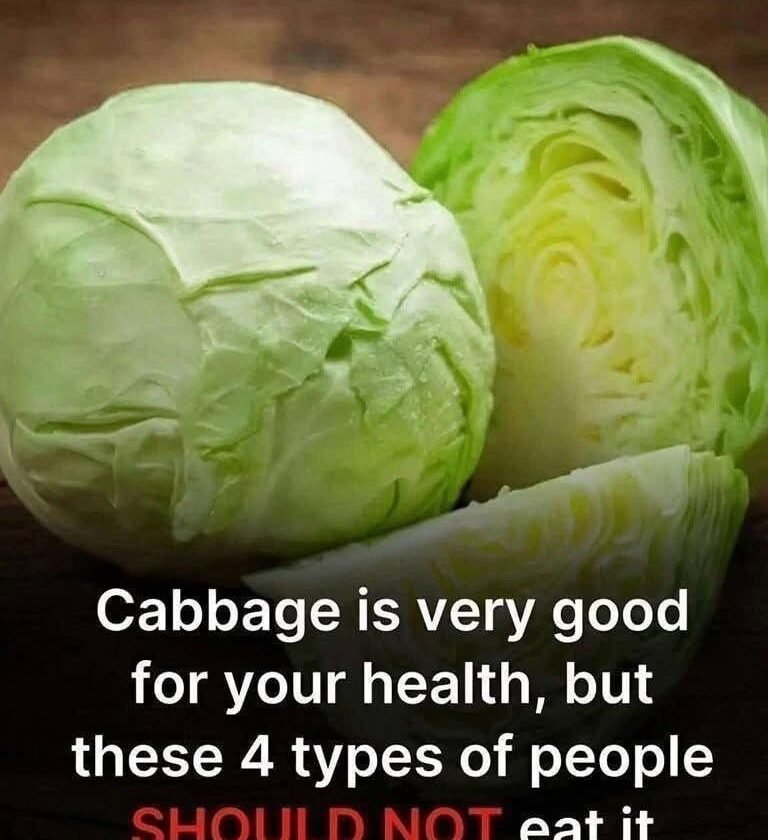
1. People with Irritable Bowel Syndrome (IBS) or Sensitive Digestion
-
Why it can bother you: Gut bacteria ferment these compounds rapidly, producing gas that can trigger bloating, cramping, abdominal pain, or changes in bowel habits—especially in people with IBS or small intestinal bacterial overgrowth (SIBO).
-
What helps: Small portions of cooked cabbage are often better tolerated than raw cabbage or slaws, as cooking softens tough fibers and slightly alters how the vegetable digests.
2. People Taking Blood Thinners (Anticoagulants)
-
Why it matters: Medications like warfarin work by counteracting vitamin K. Suddenly eating large amounts of cabbage—or swinging wildly from eating none to eating a lot—can reduce how effectively your blood thinner works.
-
What helps: Most people on blood thinners do not need to ban cabbage completely, but keeping your daily or weekly vitamin K intake consistent and checking with your prescribing doctor or pharmacist is important.
3. People with Thyroid Conditions (Especially Hypothyroidism with Iodine Deficiency)
-
Why it matters: For most people with normal thyroid function and adequate iodine intake, typical servings of cabbage do not cause thyroid problems. The risk is mainly relevant if you have an underactive thyroid (hypothyroidism) and low iodine levels, or if you consume massive amounts (such as daily raw cabbage juicing).
-
What helps: Cooking cabbage reduces goitrogenic activity, and ensuring adequate dietary iodine (such as iodized salt where appropriate) helps protect thyroid hormone production.
4. People Prone to Kidney Stones or Gout Flares (With Specific Triggers)
-
Oxalate sensitivity / kidney stones: While cabbage is generally lower in oxalates than spinach or beet greens, people with a history of calcium oxalate stones who are following strict low-oxalate plans often track all leafy/cruciferous vegetables carefully.
-
Purines and gout: Cabbage contains modest amounts of purines (which break down into uric acid), though vegetable purines are generally less strongly linked to gout flares than organ meats, certain seafood, or alcohol. Still, individuals managing gout sometimes notice personal food triggers.
Quick Summary: Who Should Be Most Careful?
| Group | Main Compound / Factor | Practical Approach |
| IBS / Sensitive Gut | Fermentable carbs (FODMAPs) & fiber | Test small, cooked portions; limit raw cabbage |
| Blood Thinner Users | Vitamin K | Keep intake steady; consult your doctor/pharmacist |
| Thyroid / Low Iodine | Goitrogens (in large/raw amounts) | Avoid extreme raw intake; cook thoroughly if advised |
| Stone / Gout History | Oxalates / purines (individual sensitivity) | Moderate portions; stay well-hydrated |