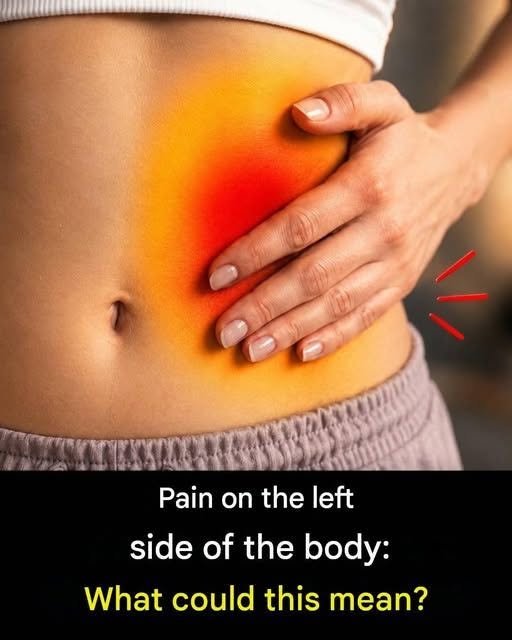
Common Possibilities by Area
1. Left Chest, Shoulder, or Arm
-
Musculoskeletal or nerve irritation: Strained chest or shoulder muscles, rib inflammation (costochondritis), or a pinched nerve in the neck/upper back often hurt more when you press on the spot, twist, or move your arm.
-
Heart or lung issues: Angina, a heart attack, inflammation around the heart or lung lining (pericarditis or pleurisy), or a lung issue can cause pressure, squeezing, tightness, or sharp pain that worsens with breathing. Heart pain sometimes radiates into the left arm, jaw, neck, or back.
2. Upper Left Abdomen & Under the Left Ribs
-
Digestive causes: Gas, bloating, acid reflux (GERD), gastritis, or a stomach ulcer frequently cause burning, gnawing, or cramping discomfort in the upper left belly.
-
Pancreas or spleen: Pancreatitis can cause deep upper abdominal pain that radiates toward the back. Spleen enlargement or injury sits under the left ribcage and can occasionally refer pain up toward the left shoulder tip.
3. Lower Left Abdomen & Groin
-
Bowel & digestive causes: Constipation, trapped gas, irritable bowel syndrome (IBS), or diverticulitis (inflammation or infection of small pouches in the colon, most common in the lower left abdomen) can cause cramping, aching, or sharper pain.
-
Urinary or reproductive causes: Left-sided kidney stones, urinary tract infections, or—in people with ovaries—ovarian cysts or pelvic issues can cause lower left or groin pain.
4. Left Flank, Back, or Leg
-
Kidney or back issues: A left kidney stone or kidney infection typically causes dull or sharp pain in the left flank/back that may wrap toward the lower belly or groin. Muscle strains or sciatica can cause aching or shooting pain down the back or left leg.
When to Pay Closer Attention—and When to Seek Urgent Care
Seek emergency medical care right away if left-sided pain comes with any of these warning signs:
Chest pressure, tightness, squeezing, or heaviness—especially if spreading to the left arm, jaw, neck, shoulder, or back
Shortness of breath, trouble breathing, dizziness, lightheadedness, or cold sweats
Sudden, severe, or rapidly worsening belly or back pain, or an abdomen that feels rigid or very tender to the touch
Fever, chills, persistent vomiting, blood in your stool or urine, or fainting
Pain following a significant fall, car crash, or blow to the chest, ribs, back, or abdomen