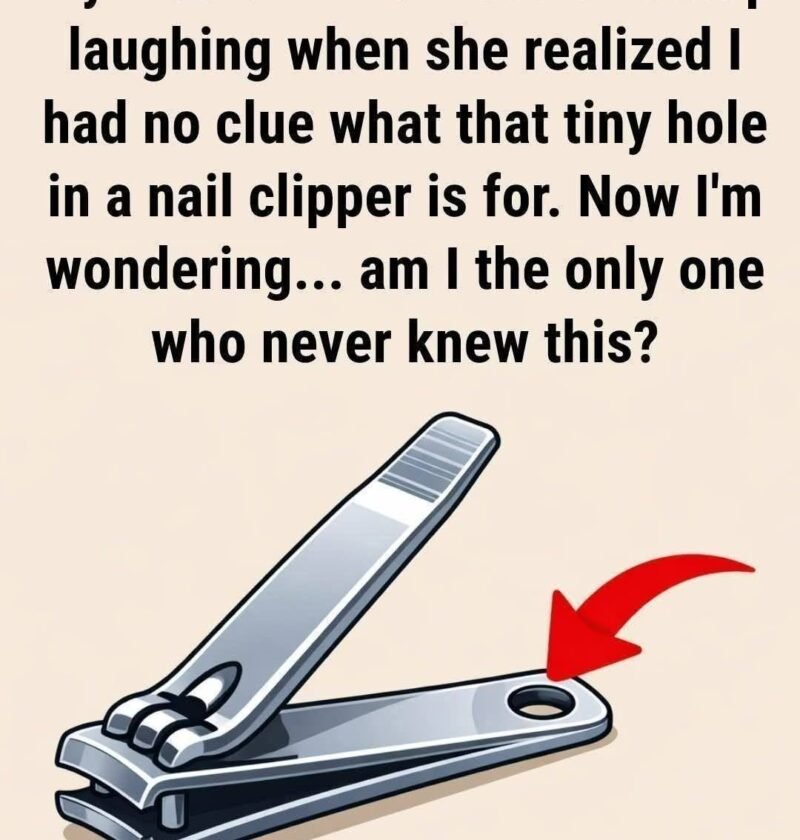
That small round hole on a nail clipper—usually located near the tip of the pivoting lever or at the base of the swing-out nail file—is primarily there for keychain attachment and practical hanging or storage, rather than a secret hidden tool function.
Viral posts love to invent elaborate “secret” uses for everyday objects, so it helps to separate actual design features from clever folklore.
What the Small Hole Is Actually Designed For
-
Keychain or Lanyard Attachment: On many pocket or travel nail clippers, a small round hole at the end of the lever (or on the file tab) lets you thread a split ring, cord, or carabiner through it so the clipper stays attached to a keychain, toiletry bag, or travel pouch without getting lost.
-
Hanging and Display: During manufacturing, packaging, or home storage, a hole lets the clipper hang neatly on a peg, hook, or cord.
What About the Other Holes and Slots on a Nail Clipper?
If you look closely at a standard nail clipper, there are a few other openings that each have a specific mechanical purpose:
-
The Long Slot Along the Lever: This isn’t a bottle opener (a common viral myth that can actually bend or break the lever). It is a weight-reducing cutout and ergonomic finger grip that also gives clearance around the rivet/pin when the lever flips around.
-
The Central Pin / Rivet Opening: Where the curved blades and the lever anchor together so pressing down on the lever multiplies force onto the cutting edges.
-
The Gap Between the Blades: Where the nail sits and where clipped nail pieces collect before you empty them out.
Why “Secret Purpose” Posts Stretch the Truth
-
Novelty Over Utility: Trying to force a tiny hole on a thin stamped-metal lever to act as a wire stripper, threader, or pry tool usually just bends the metal or dulls/warps the alignment of the blades.
-
Simple Engineering Wins: Everyday tools like nail clippers rely on simple leverage—a curved blade pair, a fulcrum pin, and a folding lever—where extra cutouts mostly save stamped metal, reduce weight, or provide a convenient attachment point.