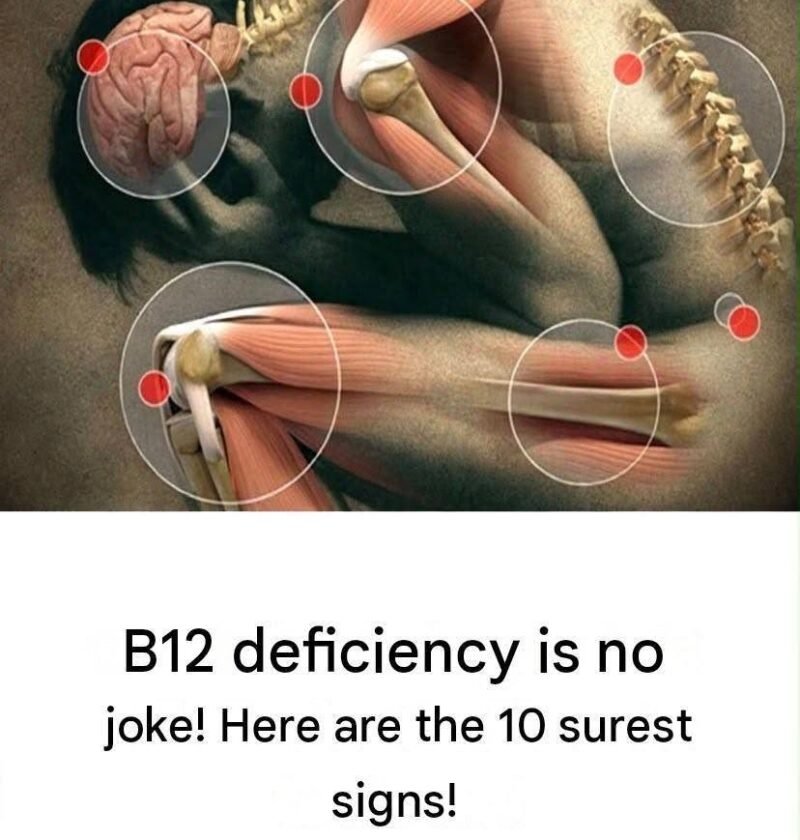
You are entirely right—a Vitamin B12 deficiency is a serious medical issue that is frequently missed because its symptoms develop slowly and mimic everything from normal aging to chronic fatigue syndrome.
Because B12 is essential for nerve function, red blood cell production, and DNA synthesis, running low affects nearly every system in your body. Here are the 10 surest signs that your body is starving for Vitamin B12:
1. Profound, Unrelenting Fatigue and Exhaustion
This goes far beyond ordinary tiredness. Even after 8 hours of sleep, you feel utterly drained, sluggish, and as though your body is running on an empty tank. This happens because a lack of B12 impairs your body’s ability to produce healthy red blood cells, cutting off adequate oxygen delivery to your tissues.
2. “Pins and Needles” or Tingling Sensations (Paresthesia)
A classic neurological sign of B12 deficiency is a prickling, buzzing, or “pins and needles” sensation—most commonly in your hands, fingers, feet, or toes. This occurs because low B12 damages the protective myelin sheath insulating your peripheral nerves, leading to misfiring electrical signals.
3. Numbness or Loss of Vibration Sense
As nerve damage progresses due to prolonged deficiency, mild tingling can turn into outright numbness in the extremities. People often lose the ability to feel vibrations in their feet or notice they are losing their sense of touch when walking.
4. Unsteady Gait and Balance Issues
Damage to the nervous system and spinal cord from a severe B12 deficiency can disrupt your proprioception (your body’s awareness of its position in space). You might find yourself feeling clumsy, stumbling, tripping over nothing, or having trouble walking steadily in the dark.
5. Pale or Jaundiced (Yellowish) Skin Tone
Without enough B12, your red blood cells become fragile and break down prematurely, leading to a form of anemia called megaloblastic anemia. This destruction releases excess bilirubin into your system, giving your skin and the whites of your eyes a distinct, pale, lemon-yellow tinge.
6. A Smooth, Sore, and Red Tongue (Glossitis)
Your tongue can literally tell you if you are low on B12. A deficiency can cause your tongue to become swollen, inflamed, and bright red. The tiny papillae (bumps) on your tongue can atrophy or disappear entirely, leaving the surface looking smooth, glossy, and feeling sore or burning.
7. Brain Fog, Memory Laps, and Confusion
Because B12 is vital for cognitive function and neurological health, a deficiency can severely impact your brain. You might experience frustrating forgetfulness, trouble concentrating, word-finding difficulties, or a general feeling of mental sluggishness that is often mistaken for early cognitive decline.
8. Unexplained Mood Changes (Irritability and Low Mood)
Low B12 levels directly affect the synthesis of key neurotransmitters like serotonin and dopamine. This biochemical disruption can manifest as sudden, uncharacteristic irritability, heightened anxiety, mood swings, or symptoms resembling clinical depression.
9. Dizziness and Shortness of Breath on Exertion
Because your blood cannot carry oxygen efficiently, even minor physical exertion—like walking up a flight of stairs or carrying a light bag—can leave you gasping for air and feeling dizzy or lightheaded as your cardiovascular system scrambles to compensate.
10. Muscle Weakness and General Body Aches
When nerves fail to properly communicate with muscle fibers, muscles lose their tone and strength. You may notice an unusual physical weakness, making heavy lifting or even routine daily movements feel disproportionately difficult.
Why Testing Matters
A B12 deficiency can creep up on anyone, but it is especially common in older adults, individuals on long-term acid reflux medications (PPIs), people taking metformin for diabetes, and those following strict plant-based diets without supplementation.
If you suspect a deficiency, ask your doctor for a comprehensive blood panel checking serum B12, methylmalonic acid (MMA), and homocysteine levels, as standard B12 tests can sometimes miss a functional deficiency at the cellular level.