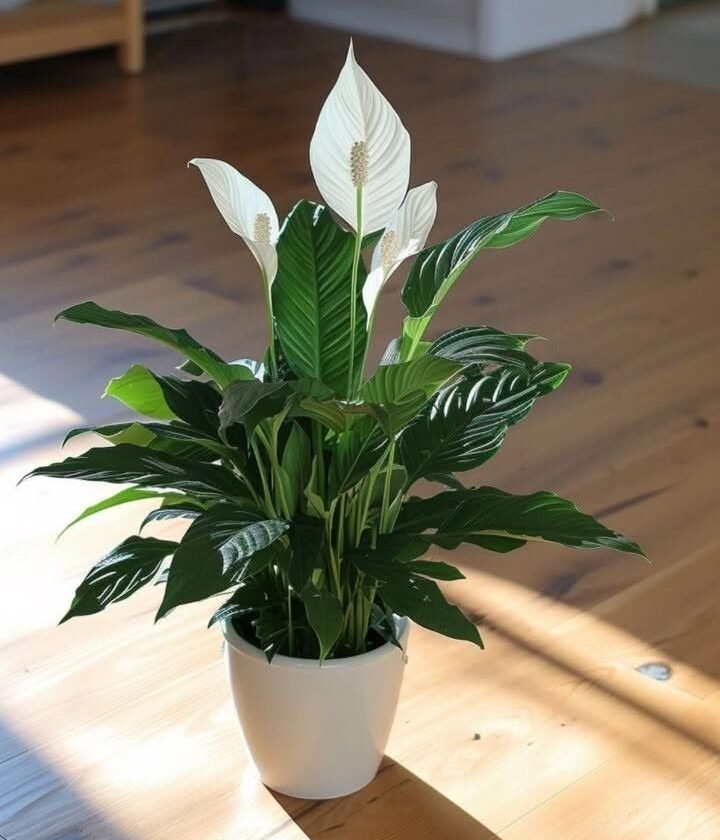
11 ways to get your peace lily to bloom 🌿
Peace lilies usually bloom when they have the right balance of bright indirect light, warmth, water, and nutrition.
Give it brighter indirect light — This is often the biggest factor. Place it near an east- or north-facing window, or a few feet from a bright south/west window. Avoid harsh direct midday sun.
Keep it consistently watered — Water when the top 1–2 inches (2.5–5 cm) of soil feels dry. Don’t let it stay bone-dry for long.
Don’t overwater — Constantly soggy soil can damage the roots and prevent flowering. Make sure the pot has drainage holes.
Feed it during the growing season — Use a balanced houseplant fertilizer at about ½ strength every 4–6 weeks in spring and summer. Avoid excessive fertilizer.
Keep it warm — Peace lilies generally prefer roughly 65–80°F (18–27°C). Keep them away from cold drafts and heating/AC vents.
Increase humidity — Moderate-to-high humidity helps overall growth. A humidifier or grouping plants together can help, especially in dry rooms.
Don’t use an oversized pot — A peace lily that’s swimming in a huge pot may spend its energy developing roots rather than flowers. Repot only when it’s genuinely root-bound.
Refresh old potting soil — If the soil has become compacted or depleted, repot into a well-draining houseplant mix. This improves both root health and nutrient availability.
Give it time to mature — Young or recently divided plants may need time to establish themselves before producing flowers.
Remove spent flowers — Once a bloom turns green/brown and fades, cut the flower stalk down near its base. This keeps the plant focused on new growth.
Be patient after changing conditions — A stressed peace lily may need several weeks to recover before it starts flowering again. Consistency matters more than constantly moving or feeding it.
If yours has lots of healthy leaves but no flowers: start with more bright, indirect light. That’s the first thing I’d change. 🌱