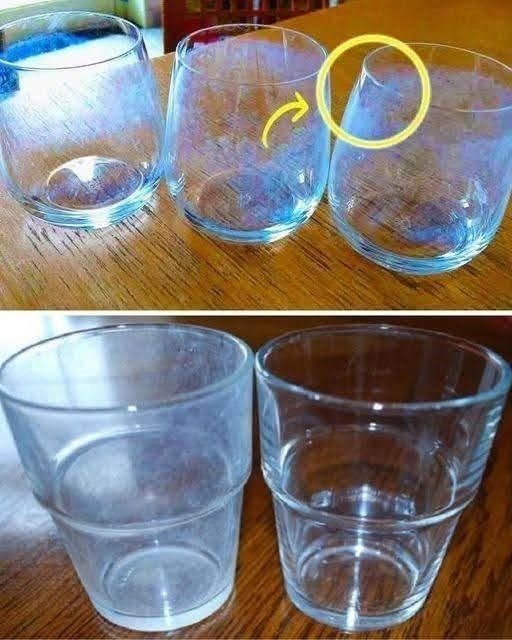
The headline is mostly true, but the “cool trick” only works if the white patina is mineral buildup—not permanent damage.
Why glasses get a white film
Usually it’s one of two things:
- Hard-water deposits: Calcium and magnesium leave a cloudy, milky coating. This can usually be removed. (Whirlpool)
- Etching: Repeated exposure to high temperatures, strong detergent, or certain dishwasher conditions can permanently damage the glass surface. Etching cannot be cleaned away. (Haier Appliances)
The simple trick: white vinegar
- Put some white vinegar on a cloth and rub a small cloudy area.
- If the white film starts disappearing, soak the glass in vinegar for about 15 minutes.
- Wash it gently with warm water and dish soap.
- Rinse and dry immediately with a microfiber cloth. (Whirlpool)
If the haze doesn’t change after the vinegar test, it’s probably etching rather than removable residue. Unfortunately, there’s no household cleaner that can restore etched glass to its original condition. (Whirlpool)
Prevent it from coming back
Use the correct amount of dishwasher detergent, use rinse aid if recommended for your machine, avoid unnecessarily high-temperature cycles for delicate glasses, and consider your local water hardness. (Whirlpool)
Bottom line: Try vinegar first. If it removes the white film, your glasses can often be made shiny again; if it doesn’t, the glass may be permanently etched.