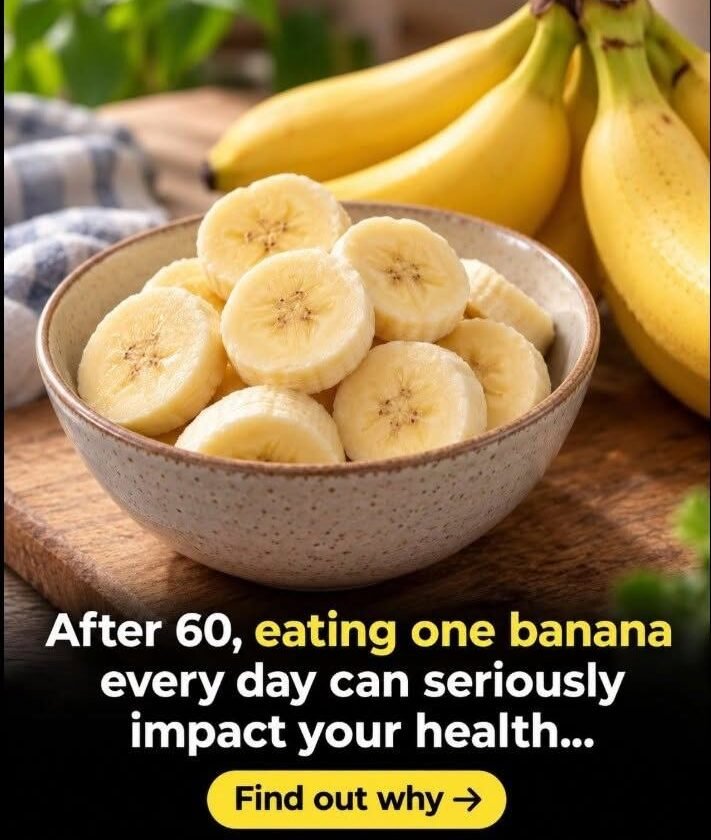
That classic, fear-inducing clickbait headline—“If you’re over 60, eating a banana a day causes…”—is engineered to make older adults second-guess one of the most wholesome, accessible fruits in the produce aisle.
Whether the ad implies bananas will cause sudden medical doom or act as a miraculous fountain of youth, the biological reality is far more mundane and much more reassuring.
Here is what actually happens when someone over 60 eats a banana every day.
The Nutritional Reality: What a Banana Provides
As we age, our bodies experience natural shifts in metabolism, kidney function, and digestion. A medium banana delivers a balanced package of nutrients that can support these changes:
-
Potassium and Blood Pressure: Bananas are famous for potassium, an electrolyte that helps balance sodium levels and supports healthy blood pressure. For many older adults, maintaining adequate potassium is vital for cardiovascular and muscle function.
-
Soluble Fiber (Pectin): The fiber in bananas supports regular digestion and helps nourish beneficial gut microbes, which is especially helpful since gastrointestinal motility naturally slows down with age.
-
Easy-to-Digest Energy: As a soft, easily digestible carbohydrate, a banana provides quick, sustained energy without heavy fats, making it a gentle snack for older adults with lower appetites.
When Age 60+ Requires a Bit of Mindfulness
While bananas are exceptionally healthy, aging does change how certain medical conditions and medications interact with diet. This is usually where the kernels of truth behind sensational headlines originate:
-
Kidney Function (The Potassium Factor): As we age, kidney clearance naturally declines to some degree. Healthy kidneys easily manage the potassium in a daily banana. However, individuals with chronic kidney disease (CKD)—which is more common in older adults—may struggle to filter excess potassium, leading to hyperkalemia (dangerously high blood potassium). If kidney function is compromised, doctors do advise monitoring potassium-rich foods like bananas.
-
Medication Interactions: Certain medications frequently prescribed to older adults—such as ACE inhibitors for high pressure or potassium-sparing diuretics—already cause the body to retain potassium. Adding high-potassium foods in large quantities requires awareness, though eating a single banana a day rarely causes an issue unless kidneys are impaired.
-
Blood Sugar Management: While bananas have a moderate glycemic index, individuals managing type 2 diabetes need to account for their carbohydrate intake. Pairing a banana with a source of protein or healthy fat (like a handful of nuts or peanut butter) helps blunt any sharp blood sugar spikes.
The Verdict
For the vast majority of adults over 60, eating a banana a day does not cause a hidden medical disaster. It provides wholesome fiber, vitamins, and heart-healthy potassium. Unless a physician has specifically placed you on a strict low-potassium diet due to kidney disease or specific medications, you can enjoy your daily banana without fear.